Difference Between Interior and Exterior Paint: Why You Can't Just Use Whatever Can Is Open in the Garage
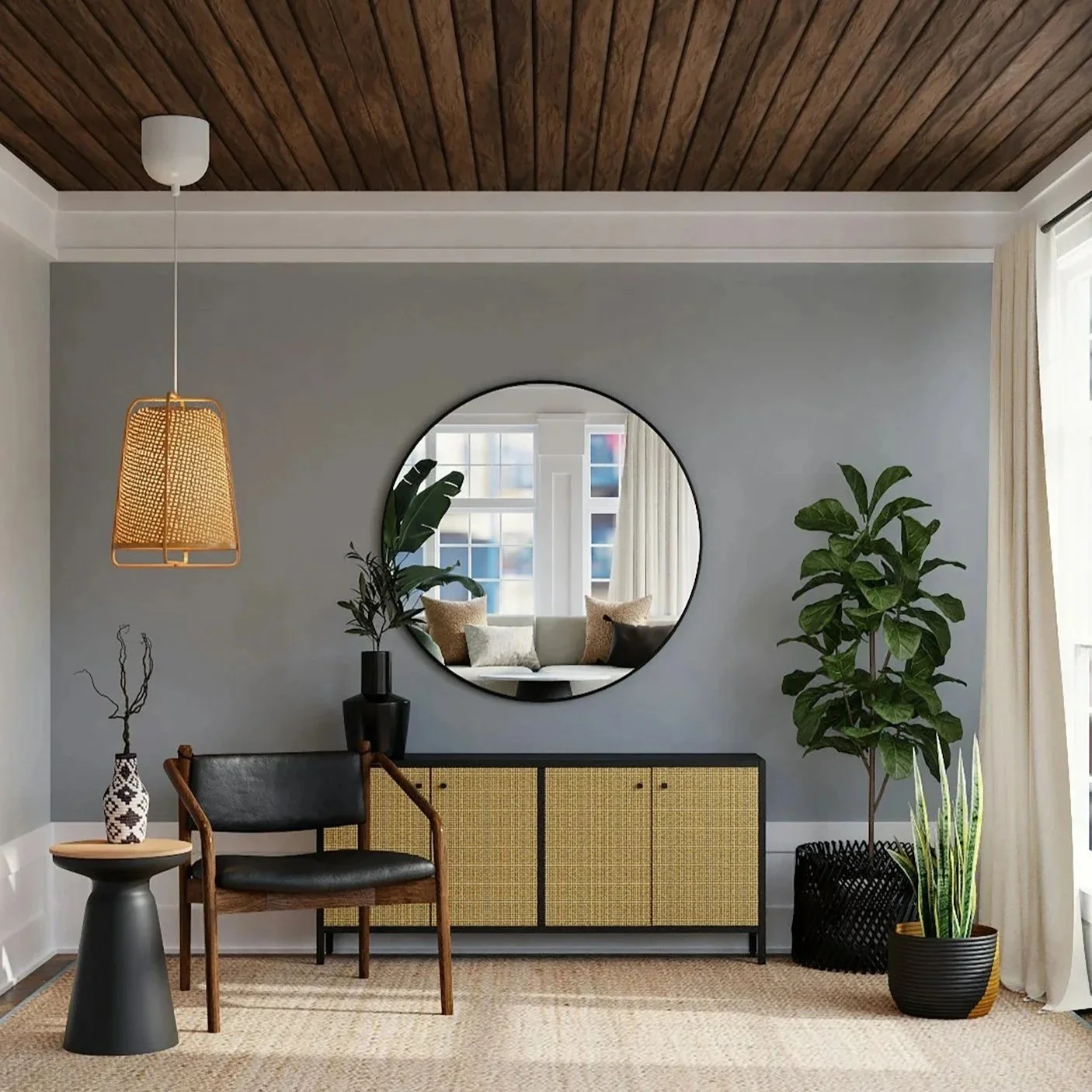
Modern interior space with painted wood ceiling and neutral walls, highlighting proper interior paint applications in residential home design.
A homeowner in Wesley Chapel called me after he'd painted a backyard fence with leftover bedroom paint from a job his wife had finished six months earlier. By the time he called, the fence had been outside through one Florida summer and was cracking, fading, and growing mildew along the bottom rail. He asked whether he could apply another coat to fix it. The honest answer was no — the interior paint was failing because it wasn't built for what was happening to it. That's the difference between interior and exterior paint in a single anecdote.
I'm Mark Savino. I've spent more than 25 years painting houses across Tampa Bay, from Belleair waterfront homes to Plant City ranches, and my crews use both interior and exterior paint every week. Here's what actually separates them, what happens when you mix them up, and how to think about it when you're standing in the garage staring at a half-full can.
The Short Answer
Interior and exterior paints look almost identical on the can but use different resins, different pigments, different additive packages, and meet different rules. Exterior paint is built to flex with temperature, resist UV, repel water, and fight mildew. Interior paint is built to scrub clean, look right under indoor light, and stay friendly to the air you breathe. They're not interchangeable. Cross-use one for the other and you get faster failures, sometimes health concerns, and almost always wasted money.
That's the verdict. Here's what's actually different inside the can.
What's Actually Different
Four real differences matter, and each one shows up on a job.
Resins. Exterior paint uses flexible resins — typically 100% acrylic — engineered to expand and contract with the substrate. A wood siding board moves with heat and humidity. A flexible resin moves with it. A rigid interior resin cracks. Sherwin-Williams says it directly on their exterior product FAQ: "Latex paints with 100 percent acrylic binders are especially durable and highly flexible, highly resistant to mildew and paint failures such as blistering, flaking, and peeling." Their Emerald Exterior uses "a patented cross-linking 100% acrylic technology." Interior resins can be more rigid because the wall behind them doesn't move much.
Pigments. Outdoor paints lean on inorganic pigments — metal oxides like titanium dioxide and iron oxide — because they're UV-stable. Organic pigments fade fast in sunlight. Reds and bright yellows are the worst offenders. Indoors, organic pigments work fine because UV through a window is filtered. Benjamin Moore markets exterior Color Lock Technology for this reason. Behr's Marquee Exterior runs a UV protection package on top of the binder system specifically to slow color fade.
Additives. Exterior paints contain mildewcides, fungicides, UV absorbers, and surfactants that resist rain streaking. Sherwin-Williams Duration Exterior says it "contains agents that inhibit the growth of mildew on the surface of this coating." Interior paints usually skip these — except for specialty bath and kitchen products, which carry a different and lower-dose indoor-appropriate mildewcide package. Benjamin Moore Aura Bath & Spa is the named example. The point: the additive blends are tuned for the environment they're meant to live in.
VOC and odor. The EPA caps flat interior paint at 100 grams of VOC per liter and non-flat interior at 250 g/L under its Architectural Coating Rule. Exterior paint generally faces looser limits because off-gassing happens outside. Modern interior premium products like Sherwin-Williams Harmony and Benjamin Moore Regal Select run at zero or near-zero VOC and qualify for GREENGUARD Gold certification.
The Data, Side-by-Side
Here's how the two product types break down at a glance.
| Feature | Interior paint | Exterior paint |
|---|---|---|
| Primary resin focus | Scuff and stain resistance | Flexibility and weathering |
| Typical binder system | Vinyl-acrylic or 100% acrylic | 100% acrylic (premium) |
| Mildewcide | Generally none (bath/kitchen lines are the exception) | Standard in nearly all formulations |
| UV stabilizers | Minimal | Heavy package; aromatic-stable |
| Pigment preference | Wider color palette including organic pigments | Inorganic / UV-stable pigments where possible |
| Surfactants | Light | Heavy; rain-streaking resistance |
| Typical sheen range | Flat / Matte / Eggshell / Satin / Semi-Gloss / Hi-Gloss | Flat / Satin / Semi-Gloss / Gloss (fewer options) |
| VOC ceiling (federal) | 100 g/L flat / 250 g/L non-flat | Generally higher caps |
| Manufacturer cross-use position | "Not recommended" (Benjamin Moore) | "Not recommended" (Benjamin Moore) |
A second table that matters — within a single brand, the interior and exterior products are usually different SKUs with different specs.
| Brand product line | Interior version | Exterior version | Notes |
|---|---|---|---|
| Behr Marquee | Marquee Interior | Marquee Exterior | Same brand family, different formulations; exterior runs roughly $10-15/gal more |
| Benjamin Moore Aura | Aura Interior | Aura Exterior | Different SKUs, distinct technical data sheets |
| Sherwin-Williams Cashmere | Cashmere (only) | (does not exist as exterior) | Interior-only line |
| Sherwin-Williams Duration | Duration Home | Duration Exterior | Shared brand family name, different products |
| Sherwin-Williams Emerald | Emerald Interior | Emerald Exterior | Different SKUs |
What Happens If You Use the Wrong One
Both directions of cross-use fail, but in different ways.
Interior paint on the outside. This is the failure pattern I see most. UV breaks down the rigid resin within months. Pigments fade. No mildewcide means immediate fungal growth on the north side of a Tampa home where the humidity and shade combine. The film cracks, water gets under it, and the whole coating starts lifting off. Multiple contractor sources put the visible failure window at three to six months in Florida conditions, and the total replacement timeline at six to eighteen months. Benjamin Moore says it plainly on its Aura Exterior page: "Benjamin Moore does not recommend that you use interior and exterior paint interchangeably, or blend them together."
Exterior paint on the inside. This is less catastrophic but still a bad idea. The mildewcide and biocide package in exterior paint isn't tuned for the indoor air a family breathes. Mildewcide off-gassing extends well past the first 30 days. The film also cures harder than interior paint and is more prone to cracking on flexible substrates like older wood trim or doors that swell and contract with humidity. The EPA notes that VOC levels indoors typically run two to ten times higher than outdoors during and after paint application, and exterior paint products generally carry higher VOC profiles than interior. Not actively dangerous in most cases. Not recommended either.
Combination Interior/Exterior Products Are Real
A homeowner with a garage door he wants to paint, plus a kitchen cabinet door he wants to match, has a real use case for one product that does both. The major brands sell exactly this.
Behr Premium Plus Interior/Exterior Hi-Gloss Enamel Paint & Primer (No. 8150). Behr describes it as "100% acrylic, mildew-resistant finish offers exceptional hide and maximum moisture resistance. VOC: 50 g/L. Excellent for high-use surfaces such as Kitchens, Bathrooms, Cabinets, Shutters, Doors, Furniture, Garage Doors, Windows, and Trim." It's sold specifically for the kind of surface that straddles indoor and outdoor exposure.
Sherwin-Williams Solo 100% Acrylic Interior/Exterior Latex. SW positions it as "an efficient solution that maximizes application options and minimizes inventory and labor costs… can be used almost anywhere — on surfaces both inside and out." Available in flat through gloss.
These products are real. They work. They're a compromise — a jack-of-all-trades formula that won't beat a purpose-built exterior on a full stucco repaint or a purpose-built interior on a bedroom wall. But for trim, doors, garage doors, cabinet exteriors, shutters, and the kind of mixed-environment surface where one paint touches both sides, combination products earn their place.
Where I Reach for Interior Paint
Interior paint is the right call anywhere the wall is in a conditioned indoor space and doesn't see UV, rain, or persistent outdoor humidity.
Bedrooms, living rooms, dining rooms, kids’ rooms. Standard owner-occupied interior surfaces. The scrub resistance and lower VOC matter more than weather resistance.
Kitchen and bathroom walls. Interior paint with the right additive package. Benjamin Moore Aura Bath & Spa, Zinsser Perma-White, or any premium interior bath/kitchen product. These carry indoor-tuned mildewcide — not the heavier outdoor biocide.
Closets and laundry rooms in conditioned space. Interior paint. If the laundry has a vent fan and is part of the conditioned envelope, the interior is fine.
Garage interior walls in an attached, semi-conditioned garage. Interior paint with mildewcide additive, or an interior bath/kitchen product if humidity gets above 70% during summer.
Air-conditioned sunroom additions with sealed vapor barriers. If the addition is truly indoor — windows sealed, AC running, building envelope continuous — interior is the right call.
Where I Reach for Exterior Paint
Exterior paint is the right call anywhere UV, rain, ambient humidity, or wind-driven moisture touches the surface — even if the surface is technically "covered."
House siding, fascia, soffits, and trim outside. Always exterior. 100% acrylic premium tier on premium jobs.
Covered porches and lanais. Yes, exterior paint, even though they're roofed. Wind-driven rain finds its way in. Humidity does too. A covered porch wall in Indian Rocks gets salt-laden air whether it's roofed or not.
Florida screen rooms and pool houses. Exterior paint. These are outdoor spaces with bug netting. UV, humidity, splash exposure, all real.
Garage exterior walls, garage doors, exterior side of fence and shed. Exterior or combination paint.
Stucco and masonry walls. Exterior, 100% acrylic, full stop. The alkali in the cement will saponify a vinyl-acrylic interior paint in a season.
Concrete pool decks, driveways, and walkways. Specialty exterior concrete coatings — neither a wall interior nor a wall exterior product. Different category entirely.
What Each One Gets Wrong
Both products fail in their own ways.
Interior paint's weaknesses outdoors. No UV protection. No mildewcide. Rigid resins crack on thermal cycling. Pigment selection isn't UV-stable. The film fails fast in Tampa conditions and visibly within months on the north side of a humid house.
Exterior paint's weaknesses indoors. Higher VOC during cure. Mildewcide off-gas lingers. The film cures harder and can crack on flexible interior surfaces. It also costs more per gallon than a perfectly serviceable interior product, so you're spending premium money for performance you'll never use inside.
These aren't deal-breakers if you're thoughtful. They're the reasons the categories exist as separate products.
Two Things Most Articles On This Topic Skip
The top-ranking articles on this question correctly explain resins and additives, then leave you hanging on the practical questions that actually come up on real jobs.
Bath and kitchen interior paint is not exterior paint. A bathroom wall sees humidity, splashes, and steam. So does an outdoor wall during a Tampa storm. Homeowners sometimes assume that means a bathroom can take exterior paint, or that exterior paint is "stronger" so it must be safer for a bathroom. It isn't. Interior bath/spa products like Benjamin Moore Aura Bath & Spa carry mildewcides specifically dosed for indoor air quality. Exterior paints carry heavier, outdoor-tuned biocides that off-gas at higher rates indoors. The right paint for a Tampa bathroom is a quality interior bath product, not a bucket of leftover house-body paint.
Lanais and covered porches are not interior spaces. I see this one constantly. A homeowner finishes a screened-in lanai and assumes that because it's roofed, interior paint will do. The lanai is at outdoor ambient temperature, outdoor humidity, exposed to wind-driven rain through the screens, and getting reflected UV off the pool deck. Interior paint fails on a Florida lanai within one summer. Use exterior, or use a combination product like Behr 8150 if you want a single can for both the lanai and an interior trim run that ties to it.
The Florida Factor
Tampa Bay's climate is harder on paint than most U.S. markets. Annual average relative humidity sits at 74 percent. Summer UV index regularly hits 12. We get 50 to 60 inches of rain a year, much of it concentrated in afternoon storms that drop water at high pressure on sun-baked walls. Salt-laden air on the coast adds another stressor on every Belleair, Indian Rocks, and Madeira Beach property within a couple of miles of the water.
Exterior paint additives are designed for this environment. Interior paint isn't. That's why the cross-use problem hits harder here than in Phoenix or Boston. The same can of leftover bedroom paint that would last two years on a fence in San Antonio will fail in six months on a fence in Tampa Bay.
It also means the "premium tier" exterior paint argument matters more here. Behr Marquee, Sherwin Duration, or Emerald, Benjamin Moore Aura — these are 100% acrylic exteriors with mildewcide and UV stabilizer packages built for the worst conditions a residential paint sees. On a Florida exterior, that's not optional. It's the baseline.
When the Customer Asks Me Which to Buy
Here's how the conversation usually goes in my truck on the driveway.
Painting the inside of a Carrollwood ranch — bedrooms, living room, kitchen, baths — interior product across the board, premium 100% acrylic for kitchen and bath, vinyl-acrylic budget tier acceptable for low-traffic adult rooms.
Painting a stucco facade in Riverview — exterior, 100% acrylic, full stop. No leftover-interior shortcuts.
Painting a covered lanai in Apollo Beach with summer storms blowing rain sideways onto the screens — exterior paint. Don't think about it.
Painting a screen room and matching the interior trim of the house it attaches to — a combination product like Behr 8150 or SW Solo, gloss enamel.
Repainting a back wood fence in Brandon that was previously done in leftover interior — exterior paint, full prep, and write off the previous job.
Painting a garage door — a combination product or exterior. Garage interior — interior paint with mildewcide if the garage isn't conditioned.
Painting a Florida room that's been retrofitted with insulated walls and central AC — interior, like any other room.
That's not a formula. That's how a quarter century of doing this teaches you to read what the surface is going through. The label on the can has to match what the wall is going to experience.
What the Data Won't Tell You
A few honest things to flag.
The 3-to-18-month failure timeline for interior paint applied outside is contractor consensus across multiple sources, not a number on any manufacturer's TDS. Manufacturers don't publish "your paint will fail in X months" because they don't recommend cross-use at all. Frame the timeline as a field experience, not a guarantee.
Pricing differences between interior and exterior in the same product line are real but vary by brand and retailer. Behr Marquee Exterior runs about $10 to $15 per gallon more than Marquee Interior on Home Depot pricing pages. Sherwin and Benjamin Moore retail prices vary by dealer and aren't publicly published. The structural truth — exterior costs more because of the additive package — holds across all major brands.
GREENGUARD Gold certification is a real signal for indoor air quality. Most premium interior lines from major brands carry it. Most exterior lines don't, because the certification is specifically about indoor chemical emissions. That doesn't mean exterior paints are toxic. It means they're not certified for use in spaces where people sleep.
Combination products are real but compromise on both ends. They're great for cabinets, trim, doors, garage doors, and shutters. They're not the right choice for a full exterior repaint or a low-VOC bedroom.
Frequently Asked Questions
Don't. It will fail in months in Tampa conditions. No UV protection, no mildewcide, no flex in the resin to handle thermal cycling. Cracking and peeling come first; mildew comes second.
You can, but you shouldn't. The mildewcide and biocide package in exterior paint isn't tuned for indoor air. VOCs are higher. The film cures harder and can crack on flexible interior trim. You're also spending premium money for performance you won't use indoors.
Bathroom interior paint contains an indoor-dosed mildewcide and uses a low-VOC formula tuned for indoor air. Exterior paint contains heavier outdoor-tuned biocides plus UV stabilizers that aren't right for a closed bathroom.
Yes, for the right job. Behr Premium Plus Interior/Exterior Hi-Gloss Enamel and Sherwin-Williams Solo are real products built for surfaces that touch both worlds — cabinets, trim, doors, and garage doors. They're a compromise compared to purpose-built interiors or exteriors, but they work well in their lane.
Yes. Roof or no roof, the air around it is at outdoor humidity and temperature, and wind-driven rain blows in. Use exterior paint or a combination enamel.
Modern premium interior paints are generally lower VOC than exterior paints because the EPA caps interior paints more strictly. Many interior premium lines are GREENGUARD Gold certified; most exterior lines aren't, because GREENGUARD is an indoor air quality standard.
No. Even outside its intended environment, paint ages, scuffs, and fades. The bigger problem is what's in the can, not how long the film lasts.
Use interior paint on indoor walls, ceilings, trim, doors, cabinets — anywhere that's conditioned space inside the house envelope. Premium 100% acrylic in kitchens, bathrooms, and high-traffic areas; vinyl-acrylic acceptable in low-traffic adult rooms.
Use exterior paint on everything the weather can touch — siding, fascia, soffits, trim, fences, lanais, screen rooms, pool houses, garage doors, anything outdoors. 100% acrylic premium tier on a Tampa exterior is the baseline, not the upgrade.
Use a combination interior/exterior product like Behr 8150 or SW Solo on surfaces that straddle both worlds — garage doors, cabinet exteriors, trim that runs from inside to outside.
Don't shortcut. The can of leftover bedroom paint in the garage isn't going to last on the fence. And the bucket of exterior left over from last year's house repaint shouldn't end up on a bedroom wall.
If you're looking at a Tampa Bay paint job and aren't sure whether the surface calls for interior, exterior, or a combination product, give us a call at (813) 831-5433 or request a free estimate. We'll walk the space with you, recommend the right product for each surface, and quote it honestly.
