Enhancing Interiors with Quality Drywall Installation
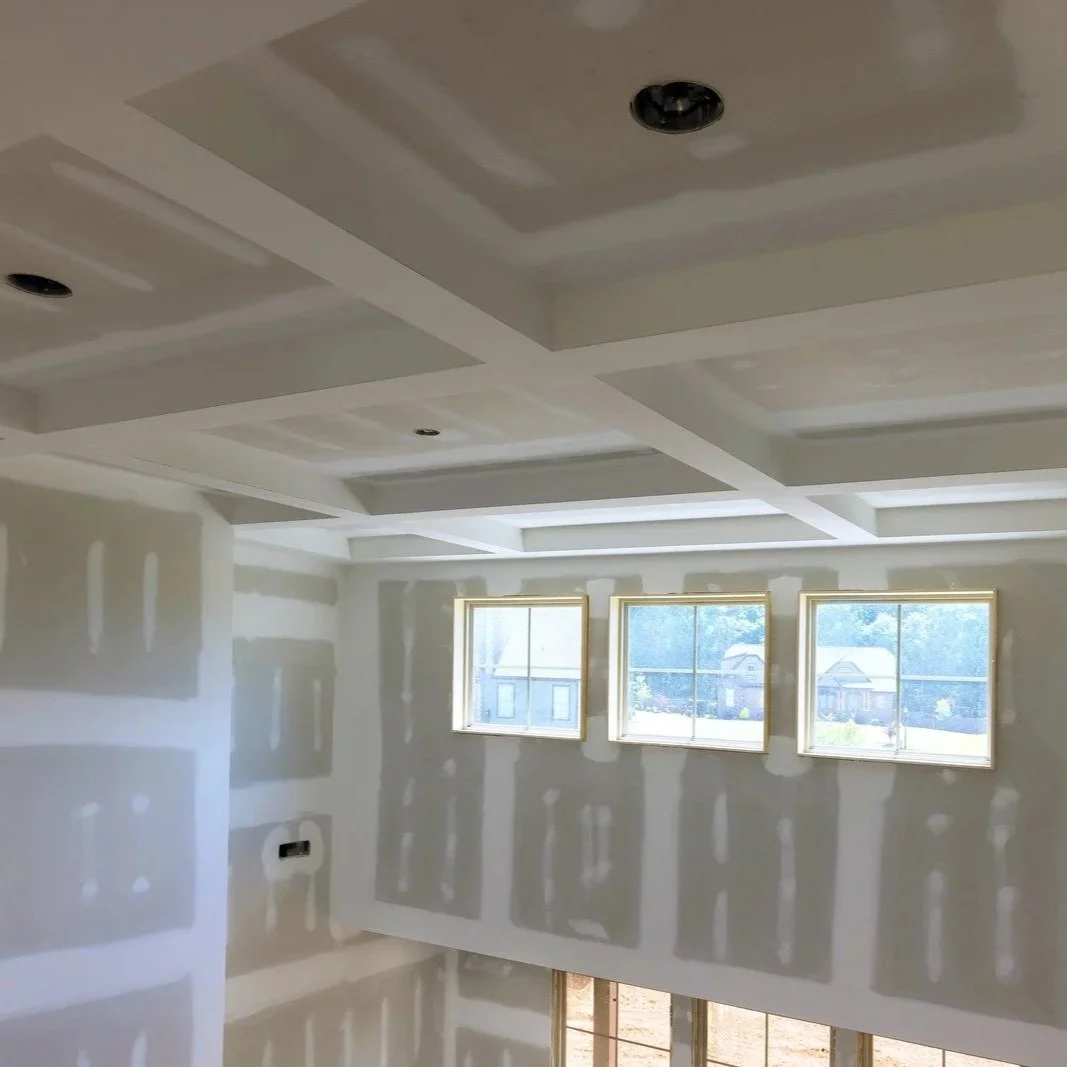
Professional drywall installation creates smooth walls, precise ceiling details, and durable surfaces ready for painting and interior finishing work.
Drywall is one of those silent heroes in construction. It doesn’t brag. It doesn’t sparkle. But it’s the canvas behind every beautiful wall finish, the quiet framework that supports your favorite paint colors, artwork, and gallery of family photos. Done right, drywall doesn’t call attention to itself—it simply does its job so flawlessly that everything else shines.
Behind every seamless interior lies a combination of careful planning, smart materials, and skilled drywall installation. It’s not about slapping up some boards and walking away. It’s about craftsmanship, consistency, and a knack for spotting issues before they sneak through the finish coat.
Building From The Inside Out
Interior design often starts with inspiration boards and color swatches, but underneath the vision is structure. Drywall creates the bones of the room—the walls, the ceilings, the niches, and corners where creativity takes shape. Every panel plays a role, and the way those panels are installed determines whether the final look reads as polished or just “good enough.”
Professional drywall installation brings order to the chaos of framing. Panels are measured, cut, and precisely positioned. Corners are aligned, seams are tightly fitted, and screw patterns follow codes that aren’t just for looks—they’re what keep your walls solid for the long haul.
Drywall is the stage, and if it’s uneven, every finish that follows will be forced to compete with shadows, bumps, and mysterious ridges.
The Right Materials Make All The Difference
Not all drywall is created equal. Some types handle moisture better. Others resist fire or mold. In kitchens, bathrooms, or laundry areas, moisture-resistant panels help prevent swelling and deterioration. In garages or utility rooms, fire-rated options meet local codes and provide added peace of mind.
There’s also the question of thickness. Standard interior walls usually call for half-inch panels, but ceilings may need something sturdier to prevent sagging. For soundproofing in multi-family dwellings, thicker panels or layered systems can dramatically reduce noise transfer.
Professional installers know the right match for every room, and they won’t just choose the most convenient option—they’ll select based on the space’s function, local regulations, and what will perform best over time.
Precision Is The Name Of The Game
When drywall sheets go up, the room’s future starts to take shape. Every panel must fit just right, with tight seams and minimal gaps. It’s a bit like assembling a giant jigsaw puzzle made of gypsum and paper—except the pieces aren’t pre-cut, the puzzle’s on the ceiling, and any mistake becomes a permanent feature in someone’s home or office.
Professional crews use specialized tools and methods to handle tricky areas like archways, recessed lighting, soffits, and uneven framing. They know how to float panels across studs to avoid cracking, stagger joints for strength, and avoid over-screwing, which weakens the paper facing.
Those little details may not seem exciting, but they’re what separate solid, long-lasting walls from panels that need patching a year later.
It’s All In The Finish
Once the panels are up, the real artistry begins. Taping, mudding, and sanding are where the surface transforms from rough and raw to ready for paint. It might not sound glamorous, but watching a room go from seams and screws to buttery smooth surfaces has its own kind of magic.
Taping involves embedding joint tape in compound, feathering the edges, and layering compound in stages. Each layer must dry fully before the next begins. Sanding smooths out ridges and blends transitions so that when the paint hits the wall, no one can tell where one sheet ends and another begins.
Professional finishing doesn’t rush the process. It respects drying times, adjusts for humidity, and works in controlled passes. That way, the surface doesn’t just look good—it feels right too.
Working Around Obstructions Like A Pro
Every building has its quirks. Pipes where they weren’t expected. Wiring snaking across joists. Uneven framing that’s decided to curve just a little for no apparent reason. That’s where experience matters most.
Professionals can spot potential headaches early and adjust their strategy before those small details snowball into major reworks. Whether it’s scribing drywall to fit odd shapes or furring out studs to compensate for inconsistencies, the result is still straight, level, and seamless.
They also coordinate with electricians, plumbers, and HVAC techs to make sure no one’s work gets buried behind a wall—or worse, cut through during installation.
Ceilings Deserve Just As Much Attention
Ceilings often get the short end of the attention stick, but they matter just as much as walls. They reflect light, frame the room vertically, and can make a space feel taller or more expansive when finished correctly.
Hanging drywall on ceilings is an upper-body workout with a dose of gravity-defying logistics. Panels must be lifted, aligned, and secured before arms turn to jelly. It’s a task best left to those with equipment like panel lifts, T-squares, and ladders that don’t wobble like baby giraffes.
A well-installed ceiling is flat, secure, and crack-resistant. And when the room’s finished, no one even notices—because it looks exactly the way it should.
Plaster Repairs And Matching Legacy Finishes
While drywall may rule the modern construction world, many older homes still feature plaster walls that deserve some TLC. Matching those finishes requires different tools, different materials, and a serious respect for the character of older buildings.
Plasterwork involves layering coats over lath or substrate, creating a dense, smooth surface with a distinct feel and durability. When patching or blending plaster with drywall, professionals know how to match depth, texture, and sheen so that the old and new play nicely together.
That level of continuity keeps a home’s character intact while providing it with modern stability beneath.
Keeping Clean Sites And Happy Clients
Dust, noise, and mess don’t have to go hand in hand with drywall installation. Professional crews use drop cloths, plastic barriers, and air filtration systems to protect furniture, flooring, and noses alike. They plan, communicate with clients, and work within schedules that minimize disruption.
A clean job site isn’t just a courtesy—it’s part of what makes the project feel manageable for the homeowner or business. It shows respect for the space and leaves behind something more than finished walls. It leaves a sense of trust.
Drywall That Plays Well With Paint
Perfect drywall isn’t worth much if paint doesn’t love it. That’s why preparation doesn’t stop after the final sanding pass. Before any color hits the walls, surfaces need to be primed. Primer fills pores, seals the surface, and provides a uniform base for paint to cling to.
Skipping primer often leads to blotchy patches, uneven absorption, and colors that don’t quite match the swatch. Professionals never cut corners on prep. They use the right primers for the room and paint type, and even test small areas to check for surface reactions or hidden blemishes.
Paint might be the fun part, but its success hinges on the groundwork laid by careful drywall installation.
A Wall’s Worth Of First Impressions
Walls may not be flashy, but they’re part of every interaction in a space. They hold up artwork, support lighting, and influence how a room feels and functions. Uneven surfaces, nail pops, or cracks can subtly undercut even the best design efforts.
With professional drywall and plaster installation, those distractions disappear. Rooms feel more intentional, light reflects evenly, and nothing distracts from the furniture, art, or architecture that’s meant to shine.
Quality installation doesn’t just protect the structure—it elevates everything that touches it. Whether building new or refreshing an older space, skilled drywall work forms the backbone of every beautiful interior. And just like a good joke, the best drywall makes its point without calling attention to itself.
| Approach | Coats | Days |
|---|---|---|
| Off-white topcoat only, no primer | 5-6 | 4-5 |
| White primer only, then off-white topcoat | 4-5 | 3-4 |
| Tinted gray primer (50% topcoat strength) + topcoat | 3 | 1.5-2 |
| Tinted primer + Behr Marquee in a One-Coat Color | 2-3 | 1.5-2 |
The math on materials cost: A gallon of Bulls Eye 1-2-3 runs about $28. A gallon of Behr Marquee runs about $48. The no-primer route requires 2 gallons of Marquee plus the labor for 5 coats. The tinted-primer route requires 1 gallon of primer plus 1 gallon of Marquee for 3 coats. The primer pays for itself in saved topcoat alone, before counting the days of labor.
What Colors Are Hardest to Cover
Some existing wall colors trigger more aggressive priming than others. If your wall is one of these, plan for two coats of tinted primer instead of one.
Deep reds, burgundies, brick reds. Transparent quinacridone-family pigments. Hardest to cover by a wide margin. Plan on two tinted primer coats minimum, sometimes three if going to pure white.
Bright yellows. Low-opacity pigments that ghost through everything. Two primer coats.
Deep navies and royal blues. High tinting strength, low hide. Two primer coats.
Dark forest greens and emerald greens. Similar mechanism to deep blues. Two primer coats.
Black accent walls. Value contrast is so extreme that even with proper priming, two topcoat coats are the floor. Plan for four coats total (two primer, two topcoat).
For lighter dark colors — mid-gray, taupe, muted olive — one tinted primer coat is usually enough. The pigment isn't fighting you, just the value gap.
The Florida Factor
Tampa Bay's interior painting climate adds time to every multi-coat job.
Humidity extends recoat windows. Tampa’s annual average humidity sits around 74 percent. At 70 percent or higher RH, water-based paint can take roughly twice as long to dry. The recoat window printed on the can needs to be extended by an hour or more in summer.
This compounds on multi-coat jobs. A five-coat job in July without AC could stretch from three days to a week. That extension alone makes the tinted primer technique more valuable in Tampa than in dry climates. Cutting from five coats to three saves two days, even before you count the humidity multiplier.
Run the AC during application and dry time. Aim for indoor humidity below 50 percent. The HVAC running at 68 to 72 degrees Fahrenheit is roughly ideal. Drop the thermostat a couple of degrees below your normal set point — a cooler coil pulls more moisture out of the air.
Plan around afternoon storms. Tampa's June-through-September afternoon thunderstorms spike humidity inside the house, even with the AC running, due to door openings and HVAC cycling. Schedule rolling sessions for mornings. Don't paint right before a tropical storm or during a hurricane watch — power cuts mid-job mean no AC, no dehumidifier, and paint that won't cure properly.
The Step-by-Step Process
Here's how we do this on a Tampa job:
Clean the wall — knock down dust and grease with a damp microfiber. Let it dry.
Patch holes and dings, skim-sand smooth, vacuum the dust.
Spot-prime any stains with Zinsser B-I-N (water marks, smoke, bleed-through).
Mask and protect — tape baseboards, drop cloth on the floor.
Have the primer tinted at the paint counter to 50% strength of your topcoat color. Don't exceed 2 oz colorant per gallon for standard Bulls Eye 1-2-3, Kilz 2, or Behr Premium Plus 436.
Apply coat one of tinted primer — cut in with a brush, roll with a 3/8 inch nap microfiber cover. Thin even coat.
Wait the full recoat window — usually 4 hours, longer in Tampa humidity. Run the AC.
Apply coat two of tinted primer if needed — for deep red, deep blue, or black walls.
Apply coat one of topcoat, then wait for the recoat window.
Apply coat two of topcoat. Inspect under raked light before declaring it done.
Total: 3 to 4 coats, 1.5 to 2 days in good conditions.
Two Things Most Articles On This Topic Skip
The top results on this search are mostly Lowe's, Bob Vila, and a few DIY blog posts. Two pieces of information that actually matter on a Tampa Bay job rarely get said clearly.
White primer over dark walls doesn't solve the problem. Most articles tell you to "prime first" without specifying that the primer needs to be tinted. White primer over deep navy still shows ghosting through one coat, so you'll end up doing two coats of white primer plus two coats of topcoat — that's four coats total, only one coat better than just topcoating. The tinted primer is what cuts the count to three. Generic white primer is half a solution.
Paint-and-primer-in-one isn't actually primer. Most consumer articles conflate paint-and-primer-in-one products with the tinted primer trick. They're not the same thing. Paint-and-primer-in-one is marketing language for thicker-bodied paint with more solids. It's a topcoat. It doesn't replace a dedicated bridge primer over a dark wall. If you buy a gallon of Behr Marquee thinking it's "paint and primer in one" and skip a separate primer step over deep navy, you'll end up at four or five coats — same as any other topcoat without primer. The trick is the dedicated tinted primer layer underneath.
When the Customer Asks Me Which Color Gets Which Primer
Here's how the conversation usually goes when I'm walking in a room with a homeowner.
Deep navy or charcoal walls going to off-white in a Carrollwood living room — one gallon of Bulls Eye 1-2-3 tinted to light-medium gray, one coat. Then two coats of Behr Marquee or SW Cashmere in off-white. Three coats total.
Deep brick red dining room going to soft white in a Hyde Park bungalow — two coats of Bulls Eye 1-2-3 tinted gray, plus two coats of Marquee or Aura in white. Four coats total because red is the worst-case pigment.
Black accent wall going to medium gray in a South Tampa bedroom — one coat of Kilz 2 Gray (pre-tinted), one coat of Bulls Eye 1-2-3 tinted to the medium gray, then two coats of medium gray topcoat. Black to gray is still a big value shift.
Saturated emerald green going to cream in a Brandon master bedroom — two coats of Bulls Eye 1-2-3 tinted to soft beige, then two coats of cream topcoat. Green has decent hide, but the cream is light enough to need the bridge.
Deep purple accent wall going to white in a Wesley Chapel kid's room — one coat tinted gray primer, one coat Kilz 2 Gray as second primer, then two coats white topcoat. Purple is harder than people think.
That's the diagnosis. Once we know the existing color and the target color, the primer plan is usually obvious.
What the Data Won't Tell You
A few honest things to flag.
The "five to six coats without primer" framing is industry experience, not a manufacturer-published spec. Manufacturers won't publish "this many coats over this color" because there are too many variables. My field experience says five to six is the typical range for dark navy to off-white without primer. Your specific job might be four, or it might be seven.
Behr Marquee's One-Coat Color Guarantee is real but specific to a curated collection of approved colors. Behr's own page says "Multiple coats required when… applying over heavy stains, which may require spot priming, multiple coats, and/or longer dry time." A dark navy wall qualifies as that kind of substrate. The one-coat guarantee doesn't override the need for a primer underneath in dark-to-light scenarios.
Cheap roller covers shed lint into tinted primer film, which forces touch-ups. Spend the $14 on a quality 3/8 inch nap microfiber cover. The lint from a bargain cover into a primer coat is its own form of streaks that don't disappear under a topcoat.
Mixing brands at the tinting counter is fine, but colorant systems differ between stores. Tint Sherwin-Williams primer at a SW store. Tint Behr or Kilz at Home Depot. Mixing primer from one store with topcoat tinted at another sometimes produces a slight color shift in the dried film.
Frequently Asked Questions
White primer is half a solution. It blocks better than no primer, but white over dark navy still shows ghosting through one coat. Tinted primer in a midtone bridges the value gap and lets the topcoat finish the job in fewer coats.
Roughly 50 percent of your topcoat color. Off-white topcoat gets a light-medium gray primer. Warm cream gets a light beige. The paint counter should know the half-formula tint.
No. Paint-and-primer-in-one is the marketing language for a thicker topcoat. It doesn't replace a dedicated tinted primer layer over a dark wall.
Manufacturer-recoat windows assume 50% humidity. In Tampa, the summer temperature is 70 to 80 percent, extending the wait by at least an hour.
B-I-N is shellac-based and not really tintable for this use case. Use a water-based tintable primer (Bulls Eye 1-2-3, Kilz 2, or Behr Premium Plus 436) for the bridge layer.
The same logic applies in reverse. Tint the primer toward the dark topcoat color. Going from white to navy, tint the primer to a medium-light blue. Two coats of tinted primer plus two coats of dark topcoat usually finishes the job in 4 coats.
You can paint over dark walls without doing five coats by using a tinted primer matched to 50 percent of your topcoat color, applied in one or two coats, then topped with one or two coats of a quality topcoat. Three to four coats total instead of five to six.
The key is the tint on the primer. White primer doesn't bridge the value gap. Paint-and-primer-in-one doesn't replace a dedicated primer layer. Premium topcoat alone won't finish the job without help underneath.
In Tampa Bay, run the AC throughout the job to keep dry times reasonable. Plan around afternoon storms. Don't rush the recoat windows.
The primer step pays for itself in saved topcoat gallons and saved days of labor. Spend the $28 on the right primer. Get the right tint at the counter. Then enjoy a three-coat job instead of a five-coat one.
If you're planning a dark-to-light repaint in Tampa Bay and want a quote on the tinted-primer approach with the right product stack for your existing wall color, give us a call at (813) 831-5433 or request a free estimate. We'll walk the rooms, identify the existing colors, and quote the job with the right primer plan in writing.
