Sherwin-Williams Cashmere vs Duration: Which One Belongs Indoors? A Tampa Painter's Take After 25 Years
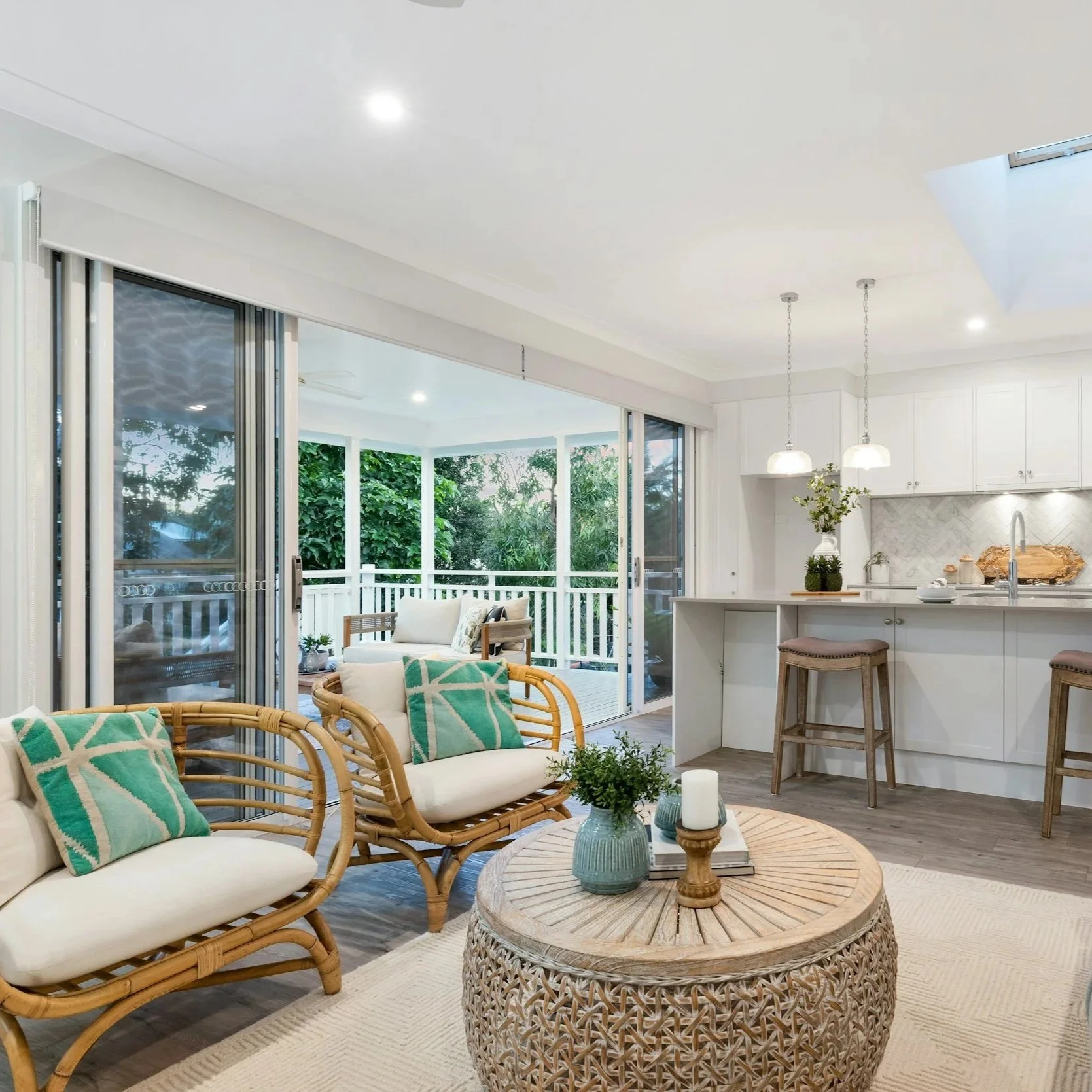
Bright Tampa interior featuring Sherwin-Williams style finishes, highlighting ideal paint choices for durable kitchens, living rooms, and humid spaces.
I get this one all the time. A homeowner standing in a Sherwin-Williams store with the rep recommending Cashmere, the contractor across the parking lot saying Duration, and the price tag showing a real difference between the two. Both are Sherwin's premium interior lines. Both have lifetime warranties. Both look great on a wall in the showroom. So which one actually belongs indoors?
I'm Mark Savino. I've been painting houses across Tampa Bay for more than 25 years, and my crews buy both Cashmere and Duration almost every week. We use Cashmere in living rooms and bedrooms in Carrollwood. We use Duration on kitchens and bathrooms in South Tampa. The question isn't which is better. The question is which belongs in which room. Here's how I decide on the job.
The Short Answer
Cashmere belongs in rooms where you'll see the finish — living rooms, bedrooms, formal dining rooms, hallways with raked light. Duration belongs in rooms where you'll clean the walls — kitchens, bathrooms, kids' rooms, laundry rooms, mudrooms. Both are quality paints. Pick by what the room does, not by which one is "better."
If forced to pick one product for an entire Tampa Bay house, I'd lean towards Duration. The humidity here pushes mildew growth on bathroom walls year-round, and Duration's anti-microbial chemistry earns the premium in Florida specifically. But the honest spec is both, zoned by room.
What "Belongs Indoors" Actually Means
People treat all interior paint like one category. It isn't. A wall paint has to do different jobs depending on the room, and the four jobs that matter most are:
Washability. When somebody bumps a wall with a backpack, splashes spaghetti sauce, or wipes a smudge off, does the finish hold up, or does it polish into a shiny spot?
Mildew resistance. This matters more in Florida than almost anywhere else. North-facing bathroom walls in Tampa Bay sit damp for weeks. The paint film on those walls needs to fight mildew growth, not host it.
Touch-up. A year from now, when somebody dings the wall, does the spot paint blend in or does it flash like a beacon?
Cashmere wins for finish, appearance, and ease of application. Duration wins washability, mildew resistance, and abuse tolerance. Touch-up is roughly a wash — both flash on heavy touch-ups, both look fine on light ones. That's the framework. Now the data.
The Data, Side-by-Side
Cashmere wins for finish, appearance, and ease of application. Duration wins washability, mildew resistance, and abuse tolerance. Touch-up is roughly a wash — both flash on heavy touch-ups, both look fine on light ones. That's the framework. Now the data.
| Spec | Cashmere Interior | Duration Home Interior |
|---|---|---|
| Type | 100% acrylic latex | 100% acrylic latex with cross-linking technology |
| Sheens available | Flat, Eggshell, Low Lustre, Medium Lustre, Pearl | Matte, Satin, Semi-Gloss (Flat in some markets) |
| Coverage per gallon | 350–400 sq ft | 350–400 sq ft |
| VOC | <50 g/L | <50 g/L |
| Dry to touch | 1 hr at 77°F | 1 hr at 77°F |
| Recoat time | 4 hrs at 77°F / 50% RH | 4 hrs at 77°F / 50% RH |
| Min application temp | 50°F | 50°F |
| Volume solids (low lustre / satin) | 41% | 38% |
| Self-priming on previously painted walls | Marketed yes; weak on patches | Yes, two-coat self-prime |
| Mildew-inhibitor chemistry | No | Yes (anti-microbial agents) |
| Cure to washable | Standard | 14 days for max washability |
| Retail price per gallon | ~$70–$75 | ~$75–$100 |
A note on what the table doesn't show: Sherwin-Williams doesn't publish ASTM scrub-cycle numbers for either product on the public TDS, so I can't put a hard scrub-rating number in this table. What the field experience shows is that Duration's cross-linking film is meaningfully tougher than Cashmere's — confirmed across hundreds of jobs and broadly across contractor forum discussions. But the lab number that would prove it in print isn't published.
Where Cashmere Earns Its Spot
Smooth finish in raked-light rooms. Cashmere self-levels. The roller stipple flows out, and the dried film reads almost satin-smooth even at low-luster sheen. In a living room with afternoon light hitting the wall sideways, that finish quality is what you'll notice — and Duration doesn't quite match it.
Bedrooms and formal spaces. Master bedrooms, guest bedrooms, formal dining rooms, libraries — rooms where the walls don't take daily abuse. Cashmere finishes them cleanly, and the homeowner saves $5 to $25 per gallon over Duration. That's real money on a whole-house repaint.
Ease of application. For our crew, Cashmere is more forgiving than Duration. It loads onto a roller cleanly, it cuts in around trim without dragging, and it washes out of brushes faster at the end of the day. Less crew fatigue means cleaner finishes on the last room of a long day.
Lighter colors. Cashmere's hide is solid on whites, off-whites, and mid-tone neutrals. The places where Cashmere's coverage gets criticized — deep saturated colors, dark accent walls — don't apply when you're painting an Agreeable Gray or an Alabaster.
Where Duration Earns Its Premium
Duration is built differently. The cross-linking chemistry and the anti-microbial agents aren't marketing — they show up in the field. Here's where the extra $5 to $25 per gallon earns itself back:
Kitchens. Splashes happen. Grease aerosolizes. Walls get wiped down weekly. Duration's washability outlasts Cashmere's in every kitchen we've ever repainted. The Mr. Clean Magic Eraser test — which polishes Cashmere into a shiny spot — leaves Duration alone.
Bathrooms (especially Tampa bathrooms). This is where Florida matters. Tampa Bay master bathrooms run hot showers twice a day in a closed, humid environment for 12 months a year. The mildew pressure on those walls is constant. Duration's anti-microbial film actively inhibits mildew growth. Cashmere doesn't — and homeowners who use Cashmere in a Tampa primary bath usually call us back inside three years for a redo.
Hallways, mudrooms, kids' rooms, laundry rooms. Anywhere walls get bumped, scuffed, sprayed, or wiped daily. Duration's film tolerates the abuse. Cashmere shows wear faster.
Dark colors and accent walls in high-traffic spots. When you do want a saturated color in a high-touch zone — a deep green powder room, a charcoal mudroom — Duration holds up better and looks closer to the original chip three years in.
What Each One Gets Wrong
Both products have real weaknesses. The smoothest selling job in the SW store won't change that.
Cashmere's weaknesses. First-coat hide is the big one. Cashmere covers the previous color in two coats; trying for one is wishful thinking on anything but a same-color recoat. Touch-ups show under raked light — not as badly as some paints, but they show. The "self-priming" claim is weaker than the label suggests, especially over fresh drywall patches and mud joints — we still spot-prime with ProBlock or a real primer before painting Cashmere. And Cashmere is not a trim paint. The film is soft, it dings, it doesn't hold up to door slams or window-trim abuse. For trim, ProClassic is the right Sherwin product. Don't pinch pennies by using Cashmere there.
Duration's weaknesses. Matte Duration can flash on touch-ups when the original paint film is heavy or built up — a known issue across contractor forums. The texture difference between brush-cut areas and roller-rolled field can read on close inspection, so technique matters more than with Cashmere. The "Satin" sheen runs duller than competing satins; if you're matching an existing Benjamin Moore satin wall, expect the Duration Satin to read flatter. And Duration is meaningfully thicker than Cashmere — it loads heavier on the roller, drags more under a brush, and tires the crew on long days. We compensate with a higher-nap roller and a slower cadence, but it's a real application difference.
These aren't deal-breakers on either product. They're things to know before you spec one for a job.
Two Things Most Comparisons Skip
A couple of items the SEO comparison articles never mention, but every Tampa contractor knows.
Cashmere is not a trim paint. I keep seeing homeowners spec Cashmere for everything — walls, ceilings, trim, doors. The walls and ceilings will be fine. The trim will look soft and chip the first time a vacuum cleaner bumps a baseboard. Trim wants a harder film — Sherwin ProClassic, or Benjamin Moore Advance, or even Duration if you have to stay in the Sherwin family. Cashmere on trim is one of the most common mistakes I get called to fix.
Duration's 14-day cure-to-wash is real. Sherwin states it on the technical data sheet, but customers don't hear it from the rep. If you paint a kitchen with Duration on a Friday and wipe a smudge off on Sunday, the film hasn't fully cross-linked yet, and you'll polish a shiny spot into the wall. Tell customers to give it two weeks before they start cleaning aggressively. We put that on the post-job checklist for every Duration job we deliver.
The Florida Factor
Here's where most comparisons wave their hands. We're in Tampa Bay. Summer humidity sits at 70-plus percent. Houses run AC for 9 months of the year, and the AC slowly pulls moisture out of the air, leaving condensation on the cold-side walls. Bathrooms run hot showers in a closed, humid environment year-round. North-facing walls outside collect moss; north-facing walls inside collect mildew under wallpaper or behind furniture if the room doesn't breathe.
This is why Duration matters more in Florida than the national average. The anti-microbial agents aren't a luxury here — they're a tool for the climate. A Tampa master bath with Duration on the walls stays mildew-free for years. The same bath with Cashmere on the walls usually shows pink-and-black mildew creeping along the ceiling line within two years. Same paint job, same crew, same prep — different chemistry, different result.
Two Florida-specific application notes worth knowing:
Both paints set up faster in the summer heat. When the wall temperature climbs above 85°F in a south-facing room, the recoat window compresses. Cashmere drags faster than spec; Duration's film starts setting before the rolled section evens out. We shift to early-morning starts in July and August in rooms with strong sun exposure.
Bathroom prep matters more than the paint choice. Even the best mildew-resistant paint fails if you paint over existing mildew or don't wash the surface first. We treat every Tampa bathroom repaint with a mildewcide rinse before priming, regardless of which paint goes on top. The paint is the last line of defense, not the first.
When the Customer Asks Me Which to Buy
Here's how the conversation usually goes when I'm walking through the house.
If a homeowner in Belleair is repainting the formal living room and dining room with a soft greige — we're quoting Cashmere. Smooth finish, good hide on neutral colors, and the rooms won't get scrubbed. They'll see the finished quality every day.
If the same homeowner adds the master bathroom and the kids' jack-and-jill bath to the scope — we're upgrading those rooms to Duration. The walls in those rooms get wet, get touched, get cleaned. Duration earns the difference there.
If somebody in Riverview is repainting a 2,800-square-foot home and the budget is tight — I'm proposing Cashmere on the bedrooms, formal living, and dining; Duration on the kitchen, laundry, and bathrooms; ProClassic or Emerald Urethane on the trim package. That's the room-by-room spec a 25-year painter writes. The whole-house single-paint spec is what a salesman writes.
If somebody's flipping a duplex in Pinellas Park, where the next tenant will repaint in three years — we're quoting Cashmere throughout. The mildew chemistry of Duration is wasted money on a turn unit.
That's not me hedging. That's how the rooms actually behave.
What the Data Won't Tell You
I want to be honest about what's missing from the comparison.
Sherwin-Williams doesn't publish ASTM scrub-cycle numbers on the public TDS for either Cashmere or Duration. The "Duration is more durable" claim holds up in field experience and chemistry — the cross-linking film is meaningfully tougher — but I can't hand you a lab number to prove it in print.
Consumer Reports paywalls their detailed scores. Duration Home has a CR product page, but the overall and subscores are behind a subscription. I haven't found a public CR product page for Cashmere at all. So this comparison rests on manufacturer spec sheets, contractor forum consensus, and field results from my crew's jobs — not on independent lab data.
Both products have been reformulated over the past few years. The Cashmere we put on a house in 2019 is not the same in the can today. The same goes for Duration. Specs and warranties carry over; minor chemistry shifts year to year don't always make the marketing copy.
And the SW store reps you'll talk to in Tampa, Brandon, Carrollwood, or Pinellas Park — they're sales staff, not painters. They've been trained on what to say. They haven't watched both paints fail and succeed across hundreds of houses. Take their recommendation as one input, not the answer.
Frequently Asked Questions
In high-traffic and wet rooms, yes — washability and mildew resistance earn it back. In bedrooms and living rooms, no — you're paying for performance the room doesn't need.
You can. But in a Tampa Bay primary bath running hot showers twice a day, even with the fan running, the mildew pressure is real. Duration is built for it; Cashmere isn't. Save the Cashmere for the powder room down the hall.
Depends on the kid. For older kids who don't mark up walls — Cashmere is fine. For toddlers and grade-schoolers who draw on walls, throw food, and spill drinks — Duration. The scrub durability earns its price every time you wipe a wall down.
Close, but no. Cashmere lays out slightly smoother — the self-leveling is its signature trait. Duration finishes well, too, but with both products side-by-side under raked light, Cashmere wins on appearance.
Yes. Both are marketed as "paint and primer in one," but on bare new drywall or fresh mud and patch work, you want a real PVA primer or Sherwin's ProBlock first. The self-priming claim works on previously-painted walls in good shape; it doesn't replace a real primer when the substrate calls for one.
Usually the technique, not the product. Duration is thicker than most interior paints, so it needs a slower, more deliberate roller cadence and a higher-nap roller. If you ran through it at the cadence you'd use with a thin paint, you'll see roller tracks. Slow down, work in smaller sections, and keep a wet edge.
No. Cashmere is a wall paint. Cabinets want a cabinet enamel — Sherwin-Williams ProClassic or Emerald Urethane, or Benjamin Moore Advance. Those cure to a harder film built to handle daily fingerprints and door slams.
Both are sold at any Sherwin-Williams store — there are stores across the Tampa Bay metro, from Tampa to St. Petersburg to Clearwater to Brandon, Riverview, Lutz, and Wesley Chapel. Contractor accounts unlock discounts; ask the store manager about a Property Services Account (PSA) if you're painting more than one room.
Use Cashmere in rooms where you'll see the finish — living rooms, bedrooms, formal dining, hallways, libraries. The smooth layout and lower price earn their place there.
Use Duration in rooms where you'll clean the walls — kitchens, bathrooms, mudrooms, laundry rooms, kids' rooms. The washability and mildew resistance earn the extra spend.
In a Tampa Bay home, the right answer is almost always both — zoned by room. A single-product whole-house spec sacrifices either appearance (going all-Duration in formal rooms) or durability (going all-Cashmere in wet rooms).
And on trim? Neither one. Use ProClassic for trim. Cashmere is too soft, Duration is too thick. Trim wants its own product.
If you're trying to spec Cashmere vs Duration for a Tampa Bay home and want a second opinion from someone who's actually rolled both onto hundreds of walls, give us a call at (813) 831-5433 or request a free in-home estimate. I'll walk every room with you, recommend the right paint for each one, and quote the job line-item so you can see exactly where every dollar goes.
