Should You Pressure Wash a House Before Painting It?
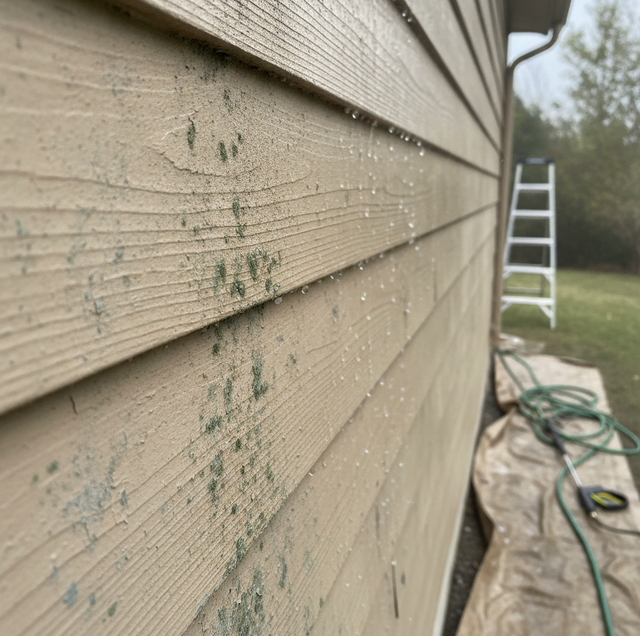
Quick Answer: Yes, washing the exterior before you paint is one of the steps that actually decides whether the job lasts. Paint bonds to a clean, sound surface, not to the dirt, pollen, chalk, mildew, and loose old paint that coat a weathered wall, so skip the wash and the fresh coat peels early. The nuance is how you wash. High-pressure blasting can gouge wood, crack stucco, and force water behind siding, so many painters use a lower setting or a soft wash: low pressure plus a cleaning solution that kills mildew and algae at the source, rather than just rinsing the surface film off. Then the wall has to dry fully, often a day or more, and longer in humid weather, before the first coat goes on.
The short answer is yes, but the reason matters more than the answer, because it tells you how to do it right. New paint doesn't grip whatever it touches. It grips a clean, solid surface. Everything a weathered wall collects between paint jobs sits in the way of that grip, so the real question isn't whether to wash but how to wash without doing damage in the process.
Why Paint Needs a Clean Surface
Think of paint like tape. Press a strip of tape onto a dusty shelf, and it lifts off in seconds, but press the same strip onto a wiped-clean shelf, and it holds. Paint behaves the same way. It forms a mechanical and chemical bond with the layer directly beneath it, and if that layer is a film of grime, the paint is really only stuck to the grime, not to the wall. When the grime lets go, the paint goes with it.
An outdoor wall collects a surprising amount of that in-between layer. Airborne dust and road grime settle on it. Pollen coats it every spring. Spider webs and cobwebs collect in the corners and under the eaves. Older paint slowly oxidizes in the sun and leaves a powdery residue called chalk. And in warm, damp conditions, mildew and algae take hold and spread across the shaded faces of the house. None of that is a surface paint can bond to. Put a fresh coat over it, and you've built the whole job on a loose foundation.
That's why washing is prep, not cleanup. It isn't about making the house look nice before the painters arrive. It's about removing every layer that would otherwise sit between the new paint and the surface it's supposed to hold onto.
Pressure Washing Versus Soft Washing
Here's where a lot of well-meaning weekend projects go wrong. "Pressure washing" and "washing before paint" get treated as the same thing, and they aren't. Pressure is a tool, and like any tool, it can be set too high.
A pressure washer aimed at full force will absolutely strip a wall clean, but it can also carve grooves into soft wood, splinter the grain, pit or crack stucco, and drive water up under lap siding into the wall cavity where you can't see it or dry it. On an older house, especially, that kind of force does more harm than the dirt ever would.
So many painters reach for a soft wash instead. A soft wash uses low pressure combined with a cleaning solution, and it does something plain water at high pressure can't: it kills mildew and algae at the root rather than blasting the visible film off the surface. The chemistry does the work, not the force. That makes it far gentler on wood, stucco, and aging siding while actually cleaning more thoroughly because it reaches the growth rather than just the surface.
The takeaway isn't that pressure is bad. It's that the pressure has to match the surface, and when in doubt, gentler wins.
Killing Mildew, Not Just Rinsing It
Mildew deserves its own point because it's the thing homeowners most often get wrong. Mildew is a living organism, not a stain. Spray it with plain water at any pressure, and you knock the surface film off, the wall looks clean, and then the fresh paint goes on. A few months later, dark blotches bleed back through the new coat because the roots were never killed. They were sitting right there under the paint, waiting.
To stop that, mildew has to be killed with the right cleaning solution before repainting, not simply rinsed. This is the whole argument for a proper wash over a quick hose-down, and it's the single most common reason a repaint fails early on a shaded wall.
Letting the Surface Dry
Washing solves one problem and can quietly create another: a wet wall. Paint applied over a surface that's still damp traps moisture beneath the film, and trapped moisture causes blistering and peeling. The wall can look dry to the eye, while wood, stucco, and the seams between boards still hold water.
So a washed surface needs time to dry all the way through before the first coat, often a full day and sometimes longer. Timing is one reason a wash has to be planned rather than done on the morning of. Rush it, and you've undone the benefit of washing in the first place.
Washing Is Not the Same as Scraping
One more distinction keeps people from cutting the wrong corner. Washing and scraping are two different prep jobs, and doing one doesn't cover the other.
Washing removes what's *on* the surface: dirt, chalk, mildew, cobwebs, and grime. Scraping and sanding remove what's *failing on* the surface: old paint that has already lost its grip and is cracking, blistering, or flaking. A wash won't take off firmly stuck paint that's simply too old, and it shouldn't, because blasting hard enough to remove sound-but-tired paint is exactly the pressure that damages the wall. Loose and peeling paint gets scraped by hand, and the edges get sanded smooth so the new coat doesn't telegraph every ridge. Both steps are prep, and a lasting finish usually needs both.
Different Surfaces, Different Handling
The same wash settings don't suit every wall, which is another reason this is worth matching to the house rather than treating as one job.
Wood is soft and grained, so it splinters and furs under too much pressure and holds water in the grain longer. Stucco is porous and can crack or pit if hit hard, and its texture traps moisture in every groove. Vinyl siding tolerates cleaning but overlaps in a way that lets driven water get behind it. Brick is durable, but its mortar joints are not, and soaked masonry takes a long time to dry. A painter reads the surface first and sets the pressure, the tip, and the cleaning solution to fit it, rather than using one setting everywhere.
Why Climate Makes This Non-Negotiable
In a humid climate, the two hardest parts of this job both get harder at once. Humidity feeds mildew and algae, so the growth is heavier and more persistent, which makes killing it (not just rinsing it) the difference between a coat that lasts and one that blotches within a season. At the same time, damp air slows drying, so a washed wall that would dry in a day in dry conditions may need considerably longer before it's safe to paint.
It cuts the other way, too. In a stretch of dry, breezy weather, walls dry fast, and mildew pressure eases, which is exactly why timing the wash to the conditions matters year-round rather than only in one season. The mechanism doesn't change with the calendar. The waiting time and the mildew load do, and both push toward more patience, not less.
A Word on Safety
Washing a house looks simple and isn't. A pressure washer throws a stream forceful enough to injure skin and to knock you off balance, and most of the work happens on ladders or at height, where a kickback or a slick rung turns into a fall. Add the cleaning chemicals, a proper wash use, and the near-certain presence of power lines running to and around the house, and the margin for error gets thin fast. This is a large part of why exterior prep is worth handing to a crew that does it daily, carries the right equipment, and knows how to work safely at height.
Frequently Asked Questions
A soft wash runs at close to garden-hose pressure, well under 500 psi, and lets a cleaning solution do the work, while a pressure washer can hit 2,000 to 3,000-plus psi. That is the gap that decides which walls get which method: wood, stucco, and older siding get the gentler soft wash because the higher numbers gouge, pit, or drive water in. Harder, sound surfaces can take more pressure, but even then, the tip and distance are dialed back rather than run wide open. The solution reaching the growth, not the raw force, is what actually cleans a wall bound for paint.
Rather than guessing, tape a square of plastic sheet tightly to the wall for a few hours, or read the surface with a moisture meter. If condensation beads under the plastic or the meter reads high, the surface still holds water and is not ready for paint, no matter how dry it looks. This matters most on the shaded north side and in the seams between boards, which stay damp long after the sunlit faces feel dry. Checking in the spot most likely to fail, not the fastest-drying one, is what keeps a coat from blistering.
The mildew is killed with a diluted bleach-and-surfactant mix, or a dedicated mildewcide, left to dwell on the wall and then rinsed, which is the exact step a plain water rinse skips. The dwell time is what lets the solution reach and kill the growth rather than just wetting the surface film. Rinse alone, and the roots survive under the fresh coat, then bleed back through as dark blotches within a season. Killing it before priming, not scrubbing it after it returns, is the only version that holds.
It can, but technique is what keeps it in check: hold the tip a foot or more off the wall, fit a wider fan tip that spreads the force rather than a narrow one that concentrates it, and spray down, with the lap of the siding rather than up under it. Aiming down means water runs off the face rather than being driven behind the boards, where it cannot dry. Angling up into the overlaps is the single move that fills a wall cavity you will never see. Get the distance, the tip, and the direction right, and the pressure cleans without hiding damage behind the siding.
No, and there is a third step people forget: after the failed paint is scraped and the sound edges are sanded and feathered smooth, the bare wood underneath usually needs a spot primer before the topcoat. Washing, scraping, and priming are three separate prep jobs that each do a different thing, and skipping the primer leaves raw wood drinking up the finish unevenly. The spot primer also seals in any tannin or knot bleed that would ghost through a fresh coat. A finish meant to last runs all three rather than treating one as a stand-in for the others.
Chalking is the powdery residue that old, oxidized paint leaves on your hand when you rub the wall, the result of the binder breaking down in sunlight over the years. New paint won't stick to that loose powder, so it has to be washed off first, and on a heavily chalked wall, a bonding primer is sometimes used as well, or the fresh coat peels away with the chalk beneath it.
Book your exterior prep and repaint the right way — a clean, properly dried surface that holds paint for years. Mark's Painting serves Tampa Bay and the surrounding areas. Licensed and insured. Call (813) 831-5433 for a free estimate.
