Should You Sand Between Coats of Paint? A Tampa Painter's Take After 25 Years
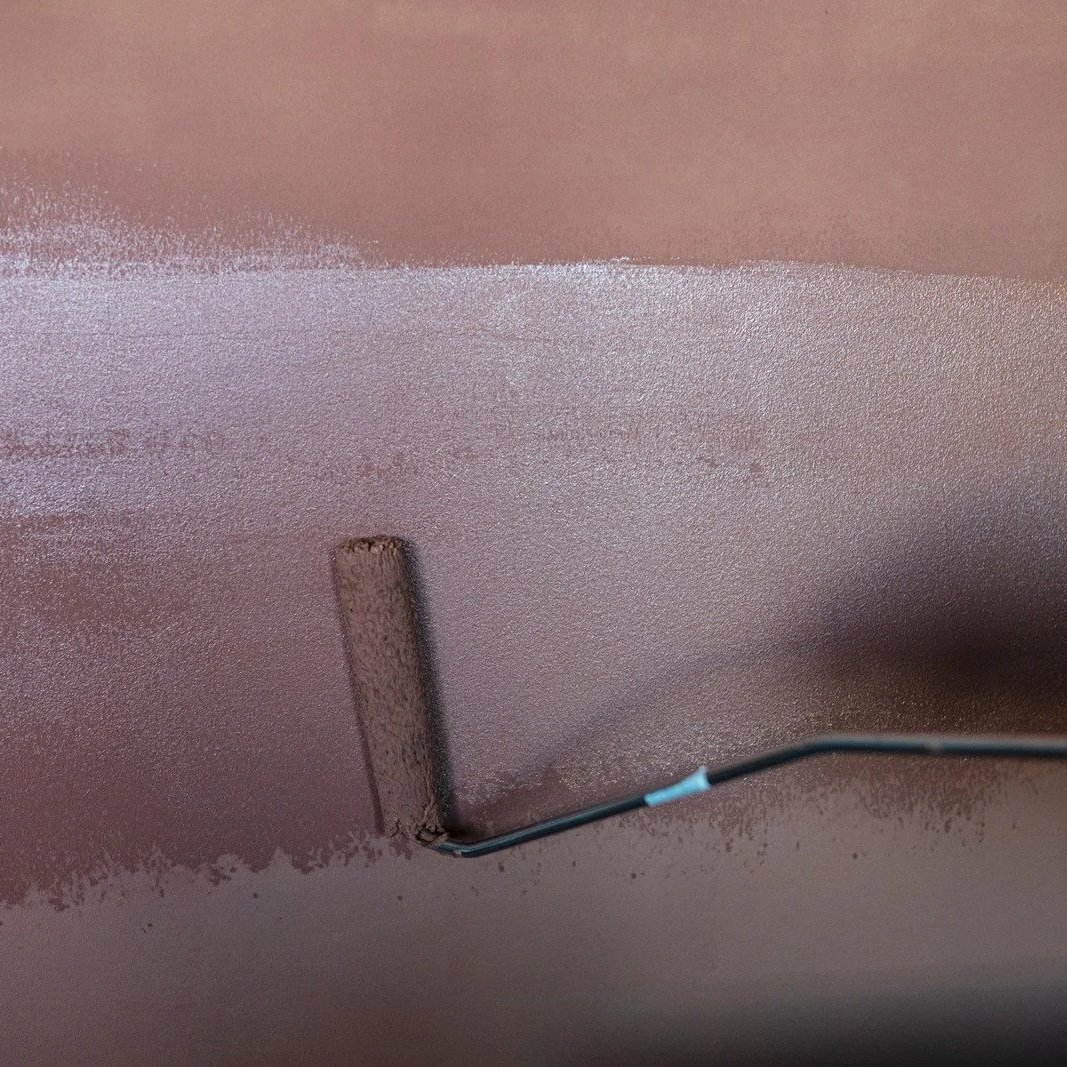
Painter applying second paint coat on interior wall, demonstrating proper sanding techniques for smoother professional Tampa home finishes.
I get this question every weekend from homeowners deep in a DIY paint job. They're between the first and second coat, looking at the wall, and they read somewhere that you're supposed to sand between coats. They want to know if they really have to. The answer depends entirely on what they're painting and what kind of finish they want.
I'm Mark Savino. I've been painting houses across Tampa Bay for more than 25 years. We sand between coats on every cabinet job we run. We almost never sand between coats on a flat-eggshell bedroom repaint. The rule isn't "always" or "never" — it's "when the finish demands it.
The Short Answer
Sand between coats when you're painting cabinets, trim, doors, or any semi-gloss/gloss enamel surface — anywhere a smooth finish will show every nib, brush mark, or dust bump under direct light. Use 220-grit for most cabinet and trim work, 320-grit for fine waterborne alkyds like BM Advance.
Don't sand between coats on flat or eggshell wall paint when you're recoating inside the manufacturer's window. The lower sheen hides minor texture, and matte surfaces give the next coat enough mechanical tooth on their own.
Always sand if you're going latex over oil, if the previous coat has cured beyond the recoat window, or if you've got visible nibs, sags, or dust in the previous coat.
In Tampa humidity — wait longer than the manufacturer's recoat window before sanding. Florida summer air can leave the film tacky underneath even when the surface feels dry.
What "Sanding Between Coats" Actually Does
A paint film does two things between coats:
Mechanical adhesion. The new coat needs something to grip. Glossy or fully-cured surfaces are slick — the new coat can peel later. Sanding creates micro-scratches that the next coat keys into.
Surface preparation. Every paint job picks up dust, debris, brush hairs, roller stipple, and small imperfections during application. Sanding knocks those down before the next coat seals them in.
For low-sheen wall paint that's barely cured, neither of those is a problem. The matte surface gives a natural tooth, and minor texture doesn't read. For high-sheen cabinet or trim paint, both are problems — the gloss telegraphs every defect.
That's why the rule isn't universal. The right question is: will the finish be scrutinized, and will the previous coat be slick or cured beyond recoat?
When You Should Sand Between Coats
Cabinet, door, and trim paint in any semi-gloss or gloss sheen. Cabinets read at eye level under direct kitchen lighting. Every nib shows. Every brush mark shows. We scuff between every coat on cabinet jobs — 220-grit for most products, 320-grit for waterborne alkyds like BM Advance.
Trim and millwork in semi-gloss. Baseboards, casing, and crown molding — all get sanded between coats for the same reasons as cabinets. Raked light at floor level shows brush marks if you didn't.
Latex going over oil-based primer or paint. This is mandatory, not optional. Oil cures hard and slick. Latex needs a mechanical tooth to bond. Skip the scuff and the latex peels in 6-18 months. Use 220-grit, dust thoroughly, then apply the latex.
Anytime the previous coat has cured beyond the recoat window. If you primed on Saturday and didn't get back to topcoat until next Friday, the primer has cured slick. Scuff with 220-grit before topcoating. This is especially common with BM Advance — the 16-hour recoat window often gets blown past in real-world schedules, and the once-soft film hardens into something that needs scuffing.
To knock down nibs, sags, or spray dust. Even on flat wall paint, if you've got visible nibs or sags in the first coat, lightly sand them out before the second coat. Otherwise, the next coat seals them in.
Spray applications. Sprayed cabinets and trim pick up more dust and overspray than brushed work. Scuff between coats clears those defects.
When You Should NOT Sand Between Coats
Flat or eggshell wall paint, recoating inside the manufacturer's window. This is the most common interior repaint scenario, and sanding between coats is unnecessary work. The matte surface has a natural tooth. The low sheen hides minor texture. Recoat directly after the manufacturer's dry-to-recoat time (usually 1-4 hours, depending on product).
Ceiling paint. Ceilings are flat sheen, low light angle, low scrutiny. Sanding between coats on a flat ceiling is just extra dust for no visible benefit.
Paint-and-primer-in-one wall products applied properly. Behr Marquee, SW Cashmere, BM Aura on walls, recoated within the spec window — sanding between is overkill. Save the labor for the cabinet jobs where it actually matters.
While the previous coat is still soft. Sanding too early gums the sandpaper, tears the paint film, and creates problems instead of fixing them. Full cure (or at minimum, full dry-through) is required before sanding. Manufacturer recoat times are minimums; sanding requires the longer end of that window.
The Right Grit for the Job
| Application | Recommended grit | Notes |
|---|---|---|
| Cabinet primer-to-paint | 220-grit | Standard scuff for tooth |
| Cabinet paint-to-paint | 220-grit | Between every coat, skip on final coat |
| BM Advance / waterborne alkyd | 320-grit | Finer for the harder cured film |
| Latex over oil primer | 220-grit | Mandatory, gives latex its bond |
| Trim and doors (semi-gloss) | 220-grit | Between coats, especially under raked light |
| Fine furniture / cabinet between final coats | 320-400 grit | Very fine, finishing-grade smoothness |
| Knocking down nibs and dust on any surface | 220 or 320-grit, light pressure | Sanding sponge is easier than paper |
| Spot fixes (sags, drips) | 220-grit | Sand down to flush, feather edges |
After sanding, dust removal is critical. Vacuum first, then wipe with a damp cloth or tack cloth. Residual dust acts as a bond-breaker between coats. Skipping the dust step undoes most of the benefit of sanding.
Two Things Most Articles Skip
Sanding too early causes more defects than it fixes. Most homeowners hear "sand between coats" and start scuffing the minute the surface feels dry to the touch. The film underneath is still soft — sandpaper gums up, paints tear in patches, you end up with worse defects than you started with. Wait until the recoat window has passed AND the film has had time to harden underneath. For Tampa humidity, add 25-50% to the manufacturer's recoat time before sanding.
Sanding doesn't replace cleaning. A clean, smooth surface accepts the next coat better than a sanded, dirty surface. If your first coat has dust, fingerprints, or grease, those need to be cleaned (TSP or a degreaser) BEFORE sanding, not just sanded over. Sanding pushes contaminants into microscratches; cleaning removes them.
The Florida Factor
Tampa humidity changes the math on sanding timing. Here's how.
Humidity slows dry-through, not surface dry. A paint film in Tampa summer at 80% RH can feel dry to the touch in 2 hours while still being soft underneath for 6-8 hours. Sandpaper applied to that film tears the paint instead of scratching it. The manufacturer's recoat window assumes 50% humidity at 70°F — in Tampa, June through September, plan to add 25-50% to those times before sanding.
Morning humidity is the killer. Tampa Bay’s annual humidity cycles around 88% at 7 AM, dropping to about 57% by 4 PM (per NOAA Tampa station data). A cabinet sprayed at 9 AM may not be fully dry to sand until late afternoon. We schedule cabinet sand-and-recoat cycles around the humidity curve when possible.
AC running indoors doesn't fully fix it. Conditioned air pulls humidity down, but the paint film still equilibrates with the room. A heavily-painted cabinet in an air-conditioned but still 60% RH garage workspace still dries slower than spec.
Hot direct sun on exterior coats can cause skinning. The opposite problem — the paint can dry too quickly on the surface while remaining soft underneath, similar to the effect of sandpaper. Plan exterior recoat for early morning or evening, and let it cure properly before sanding.
Wait longer is the universal Tampa rule. When in doubt, wait an extra hour or two beyond the manufacturer's recoat before sanding. The mistakes happen when you rush the cure, not when you wait.
When the Customer Asks Me About Sanding
Here's how the conversation usually goes during a job consultation.
If a homeowner in Carrollwood is repainting their kitchen cabinets — we're sanding between every coat. 220-grit on most products, 320-grit if we're using BM Advance. Critical for the smooth finish customers expect on cabinets.
If somebody in Westchase is doing a flat-eggshell whole-home repaint — no between-coat sanding needed. The matte sheen hides the minor texture, and we're recoating inside the spec window.
If a homeowner in Pinellas Park has primer on the trim from last weekend and forgot to topcoat — we're scuffing the primer with 220-grit before painting. The primer has cured slick.
If somebody in Belleair is going latex over oil-based trim from the 1970s — we're sanding aggressively with 180 or 220-grit. Mandatory step; skip it and the latex peels.
If somebody's got obvious nibs and sags in their first coat — we're sanding those areas only, before the second coat. Don't sand the whole wall if only one section has defects.
If somebody's sanding their cabinets at 90% humidity on a Tampa August morning — we're telling them to wait. Sand in the afternoon when the humidity drops, or run dehumidification in the workspace.
That's how it actually plays out. Sanding is a tool. The right time to use it depends on what you're painting and what's happening in the air around you.
What the Data Won't Tell You
I want to be honest about the limits of this guidance.
Manufacturer TDS documents don't always explicitly say "sand between coats" or "don't sand between coats." The recommendations in this article are based on a combination of TDS guidance (where available), trade conventions, manufacturer pro-channel content (Behr's pro blog, SW's builder FAQs, BM's contractor refinishing guides), and 25 years of jobsite experience. There isn't a single document that prescribes the exact protocol for every paint product.
Grit recommendations come from manufacturer guidance, where available, and from trade conventions. Some products list 320-400 grit as "optional" between coats; pros often use 220-grit because it's faster and the small difference in surface finish isn't visible after the topcoat. Use the finer grits for fine furniture or high-end cabinet work; 220 is fine for most everyday between-coat scuffing.
Tampa humidity figures are from NOAA Tampa Bay station data and reflect annual averages. Specific job conditions vary. The directional rule — wait longer in higher humidity — is reliable; the precise time math is job-specific.
The Florida Factor
Tampa Bay's specific architecture and light affect this decision.
Vaulted great rooms are common and challenging. Many newer Tampa builds have 12 to 20-foot vaulted great room ceilings. White ceilings in those rooms can read as cold, cavernous, and disconnected from the lived space below. Drenching in a warm mid-tone — a soft greige or even the wall color — brings the volume down visually and makes the room feel intentional. We've drenched 18-foot vaulted great rooms in Carrollwood and Westchase to good effect.
Pool and lanai light bounces into adjacent rooms. Tampa Bay homes with pool cages or open lanais get filtered light reflecting through sliders into the great room. That light has a slightly cool blue-green cast. White ceilings amplify that cast and can read cool. A warmer-tinted ceiling (or full drench in a warm color) neutralizes the bounce light. This is field experience; the design literature doesn't explicitly cover it.
Florida sun glare on white ceilings. South-facing rooms with strong direct sun can experience glare from ceiling-reflected light. A slightly tinted ceiling (warm white instead of pure white, or 50% of a soft wall color) reduces the glare without making the room feel dark.
Crown molding choices in Tampa build. Newer Tampa Bay homes often have minimal or no crown molding in bedrooms and secondary spaces — sometimes only in formal living and dining rooms. Rooms without crown molding are easier drench candidates because there's no architectural detail to flatten.
Tropical color palettes work well drenched. Tampa coastal homes often go for soft greens, blues, and warm whites. Drenching a soft Sea Salt or Comfort Gray in a primary bedroom or den reads as coastal-cocooning rather than cavernous, even in a 10-ft room.
When the Customer Asks Me What to Do
Here's how the conversation usually goes during the design walkthrough.
If a homeowner in Carrollwood has a 10-ft master bedroom in a soft greige and asks about ceiling color, we're recommending 50% tinted ceiling. Standard ceiling height, mid-depth wall color, soft middle-ground design.
If somebody in Hyde Park has a small powder room and wants to make it feel like a jewel box — we're recommending color drench in a deep saturated color. The small room, drench works beautifully.
If somebody in Westchase has an 18-ft vaulted great room and the volume feels cavernous — we're recommending color drench in a warm mid-tone. The drench brings the ceiling down visually and the room feels intentional.
If a Belleair coastal home has a primary bedroom with a sloped cathedral ceiling starting at 7 ft — drench. The angled surface flattens visually when the whole envelope is one color.
If somebody has a formal dining room with ornate crown molding and a coffered ceiling — white ceiling, no question. The architecture is the feature; don't dilute it.
If a Pinellas Park rental flip needs broad-appeal resale — white ceiling everywhere. Lower-risk, broader-appeal default.
That's how I actually decide. The room's architecture and what you want the room to do answer the question, not a one-size-fits-all preference.
What the Data Won't Tell You
I want to be honest about what's behind these recommendations.
The "drench vs white vs 50% tint" framework comes from designer consensus across multiple publications (Bob Vila, Benjamin Moore, Sherwin-Williams architectural guidance, Chris Loves Julia, Living Etc, Homes & Gardens, Kylie M Interiors). There isn't a single controlled study comparing these approaches in real homes.
Tampa-specific ceiling height data (9-10 ft standard, vaulted to 12+ ft in great rooms) is from a single Florida builder source, plus general Florida construction patterns. Your specific home may vary.
The pool-light interaction with ceiling color is a field experience — I haven't found a primary design source that quantifies it. The directional point (cool bounce light + cool white ceiling = cooler room than expected) is reliable; the magnitude depends on each specific home.
Manufacturer guidance on the 50% tint is more about the technical capability (the store can mix it) than an official design recommendation. Designers widely use the 50% formula; it isn't on the back of a paint can.
Frequently Asked Questions
No. Sand between coats on cabinets, trim, doors, semi-gloss/gloss surfaces, and any time you're going latex over oil or recoating past the manufacturer's window. Skip between-coat sanding on flat or eggshell wall paint inside the recoat window.
220-grit covers most between-coat scuffing on cabinets, trim, and over oil primer. 320-grit for finer waterborne alkyds (BM Advance) and finishing-grade smoothness on furniture. 320-400 for the final between-coat scuff before the last coat on high-end cabinet work.
At least the manufacturer's stated recoat time. In Tampa, summer humidity adds 25-50% to that. Don't sand a paint film that's still soft underneath — you'll tear it instead of scratching it.
Sanding sponges work fine for between-coat scuffing on cabinets, trim, and walls. They conform to molding profiles better than flat paper and don't leave as much dust. For knocking down a heavy sag or repairing a defect, flat sandpaper gives more control.
Yes. Vacuum first, then wipe with a damp cloth or tack cloth. Dust between coats is a bond-breaker — it prevents the new paint from adhering to the surface underneath. This step matters more than people realize.
If the topcoat is dry, peel-test a small inconspicuous area. If the paint sticks well, you may be fine — sometimes the cure between coats creates enough adhesion even without scuffing. If it lifts, you'll need to strip and start over. The risk is real; the test takes 5 minutes.
Yes — #000 synthetic steel wool works well for dulling a glossy surface without removing material. It's gentler than 220-grit paper, useful on detailed millwork or carved trim where sandpaper can't reach into crevices. Don't use regular steel wool on water-based paints; the steel fibers oxidize and leave rust spots.
Only if you do it wrong. Sand too aggressively or with too coarse a grit, and you'll see scratches through the topcoat. Stick with 220-grit minimum for general between-coat work, work in even passes, and lift the sander before stopping to avoid swirl marks.
Sand between coats for cabinets, trim, doors, gloss enamel, latex-over-oil situations, and any time the prior coat has cured beyond the recoat window or has visible defects. Use 220-grit for most work, 320 for finer waterborne alkyds.
Skip sanding between coats for flat and eggshell wall paint inside the recoat window. The matte surface gives a natural tooth, and the low sheen hides minor texture.
In Tampa humidity — wait longer than the manufacturer spec before sanding. Florida summer air keeps the film soft underneath even when the surface feels dry. Sanding too early tears the paint instead of scratching it.
The right answer to "do I have to sand between coats" depends on what you're painting. Get the answer right and your finish lasts a decade. Get it wrong and you're repainting cabinets in two years.
If you're working on a paint project in a Tampa Bay home and aren't sure whether between-coat sanding applies to your job, give us a call at (813) 831-5433 or request a free in-home estimate. I'll look at what you're painting, check the products and the schedule, and tell you honestly which steps will pay off and which will just add time.
