Elastomeric vs Acrylic Paint for Concrete-Block Homes
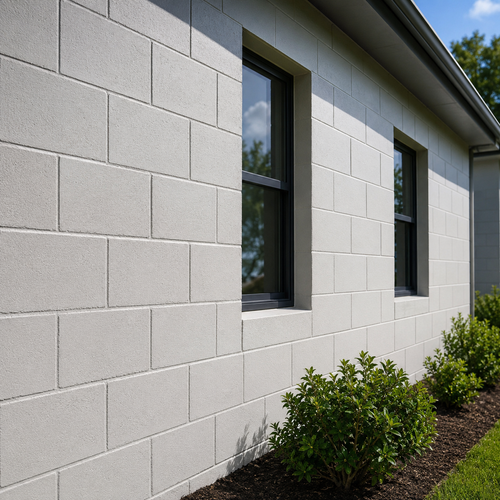
Quick Answer: For a concrete-block home, the choice comes down to how much waterproofing and crack-bridging you need. Elastomeric paint is a thick, flexible, rubber-like coating that's excellent at waterproofing and bridging small cracks, making it well suited to masonry like concrete block, especially where moisture and hairline cracking are concerns — but it's thicker, costs more, and must be applied correctly. Standard exterior acrylic paint is a quality, breathable, durable coating that's easier and less expensive to apply and works well on sound block, but it doesn't bridge cracks or waterproof the way elastomeric does. The right choice depends on the block's condition, moisture exposure, and whether crack-bridging waterproofing is needed.
Painting a concrete-block (CMU) home raises a common question: Should you use a standard acrylic exterior paint or a heavy-duty elastomeric coating? Both can work, but they're built for different priorities — and the right choice depends on your block's condition and how much waterproofing and crack protection it needs. Understanding how they differ helps you choose the coating that protects your block home best.
What Each One Is
Standard exterior acrylic paint is a quality, durable, breathable paint widely used on homes, including masonry. It goes on as a normal paint film, provides color and protection, and is the familiar exterior coating most homes use. Elastomeric paint is different: it's a much thicker, flexible, rubber-like coating that dries to an elastic film many times thicker than ordinary paint. That thick, stretchy film is designed specifically for waterproofing and to bridge small cracks. So the core difference is a normal-thickness, breathable paint film (acrylic) versus a thick, flexible, waterproofing membrane (elastomeric), and that difference drives where each one fits.
Waterproofing and Crack-Bridging
The standout strength of elastomeric paint is waterproofing and crack-bridging. Its thick, elastic film resists water penetration strongly, and because it's flexible and substantial, it can bridge and span small hairline cracks in the masonry, flexing with the surface and keeping water out of those cracks. For a concrete-block home — which can develop hairline cracks and where keeping moisture out of the porous block matters — this waterproofing and crack-bridging is a major advantage, especially in a wet climate. Standard acrylic paint, while it provides good protection on sound surfaces, doesn't waterproof or bridge cracks the way elastomeric does; it follows the surface and won't span a crack. So if moisture intrusion and hairline cracking are concerns, elastomeric has a clear edge.
| Factor | Elastomeric | Acrylic |
|---|---|---|
| Film | Thick, flexible, rubber-like | Normal paint film |
| Waterproofing | Excellent | Good on sound surfaces |
| Bridges small cracks | Yes | No |
| Breathability | Lower (thick film) | Breathable |
| Application | Thicker, needs proper technique | Easier, standard |
| Cost | Higher | More economical |
Breathability, Application, and Cost
The trade-offs of elastomeric come in breathability, application, and cost. Because it forms such a thick film, elastomeric is less breathable than acrylic, which matters because it needs to be applied correctly — if moisture gets behind a thick, less-breathable coating, it can have trouble escaping, so proper application and addressing moisture sources are important. Elastomeric is also thicker and more involved to apply, and it costs more than standard acrylic. Acrylic paint, by contrast, is breathable (allowing the wall to release moisture), easier and less expensive to apply, and a dependable choice on a block in good condition. So elastomeric's superior waterproofing comes with a higher cost, thicker application, and the need to apply it properly, while acrylic is the simpler, more economical, breathable option.
When to Choose Each
The decision comes down to your block's condition and needs. Elastomeric is the strong choice when waterproofing and crack-bridging are priorities — a concrete-block home with hairline cracks, significant moisture exposure, or where maximum water resistance is wanted benefits from its thick, flexible, waterproofing film, provided it's applied correctly. Standard acrylic is a great choice for a concrete-block home in sound condition without significant cracking or moisture issues, where its breathability, easier application, and lower cost make it practical and effective. Neither is universally better; elastomeric leans toward heavy-duty waterproofing and crack protection, acrylic toward simpler, breathable, economical coverage on sound block. The block's condition, moisture exposure, and your priorities guide the choice.
Have your block inspected for hairline cracks and moisture issues before choosing. If the walls have hairline cracking or face heavy moisture exposure, elastomeric's crack-bridging waterproofing addresses that directly. If the block is sound and dry, quality acrylic may be all you need — matching the coating to the wall's actual condition gets the best result.
Why Proper Application Matters Either Way
Whichever coating you choose, proper surface preparation and application are critical for a lasting result on concrete block — especially for elastomeric coatings, given their thickness and lower breathability. Block surfaces need to be clean, sound, and properly prepared, and any moisture sources should be addressed, as trapping moisture behind a coating can cause problems. Applying elastomeric correctly, at the right thickness and over a properly prepped surface, is what lets it deliver its waterproofing without trapping moisture. Because the right coating choice and proper application both matter for protecting a block home, a painting professional can assess your block's condition, recommend whether elastomeric or acrylic suits it, and apply it correctly for lasting protection.
Frequently Asked Questions
Acrylic paint is a quality, breathable exterior paint that goes on as a normal film and provides color and protection. Elastomeric paint is a much thicker, flexible, rubber-like coating designed for waterproofing and bridging small cracks. The core difference is a normal-thickness, breathable film versus a thick, elastic, waterproofing membrane, which is why they suit different needs on concrete block.
It depends on the block's condition and needs. Elastomeric excels at waterproofing and bridging hairline cracks, making it well-suited to block homes with cracking or significant moisture exposure. But it's thicker, costs more, less breathable, and must be applied correctly. For a sound, dry block without cracking, standard acrylic may be the better, simpler choice. Neither is universally better — it depends on the situation.
It provides strong water resistance. Its thick, elastic film resists water penetration well and can bridge small hairline cracks to keep water out of them, which is valuable for a porous concrete-block home in a wet climate. However, it must be applied correctly over a properly prepared surface, and moisture sources should be addressed, since its lower breathability means trapped moisture can cause problems.
Use quality acrylic when your concrete block is in sound condition without significant cracking or moisture issues. Acrylic is breathable, easier and less expensive to apply, and effective on sound surfaces. It doesn't bridge cracks or waterproof like elastomeric, so it's best when those aren't pressing concerns. For a dry, crack-free block, acrylic is often the practical, economical choice.
Concrete block can hold and release moisture, and a breathable coating like acrylic allows the wall to release that moisture. Elastomeric's thick film is less breathable, so if moisture gets behind it and can't escape, problems can develop. That's why elastomeric must be applied correctly with moisture sources addressed. Breathability is one of the trade-offs to weigh, especially in a humid climate where moisture management matters.
Elastomeric paint costs more than standard acrylic, both for the material and because it's thicker and more involved to apply correctly. Acrylic is the more economical, simpler option. The higher cost of elastomeric is the trade-off for its superior waterproofing and crack-bridging. So the choice balances elastomeric's heavy-duty protection against acrylic's lower cost and easier application, based on what the block needs.
Match the Coating to the Block
For a concrete-block home, elastomeric and acrylic paint suit different needs: elastomeric offers superior waterproofing and bridges hairline cracks, ideal where moisture and cracking are concerns, while acrylic is the breathable, economical, easier choice for sound, dry block. Neither is universally better — the block's condition, moisture exposure, and whether you need crack-bridging waterproofing decide it. Either way, proper prep and application are what make the coating last and protect the home.
Choosing a coating for your concrete-block home — Get the block assessed and the right paint applied for lasting protection. Mark's Painting serves Tampa Bay and surrounding areas. Licensed & Insured. Call (813) 831-5433.
