Sherwin-Williams ProClassic vs Benjamin Moore Advance for Cabinets: A Tampa Painter's Take After 25 Years
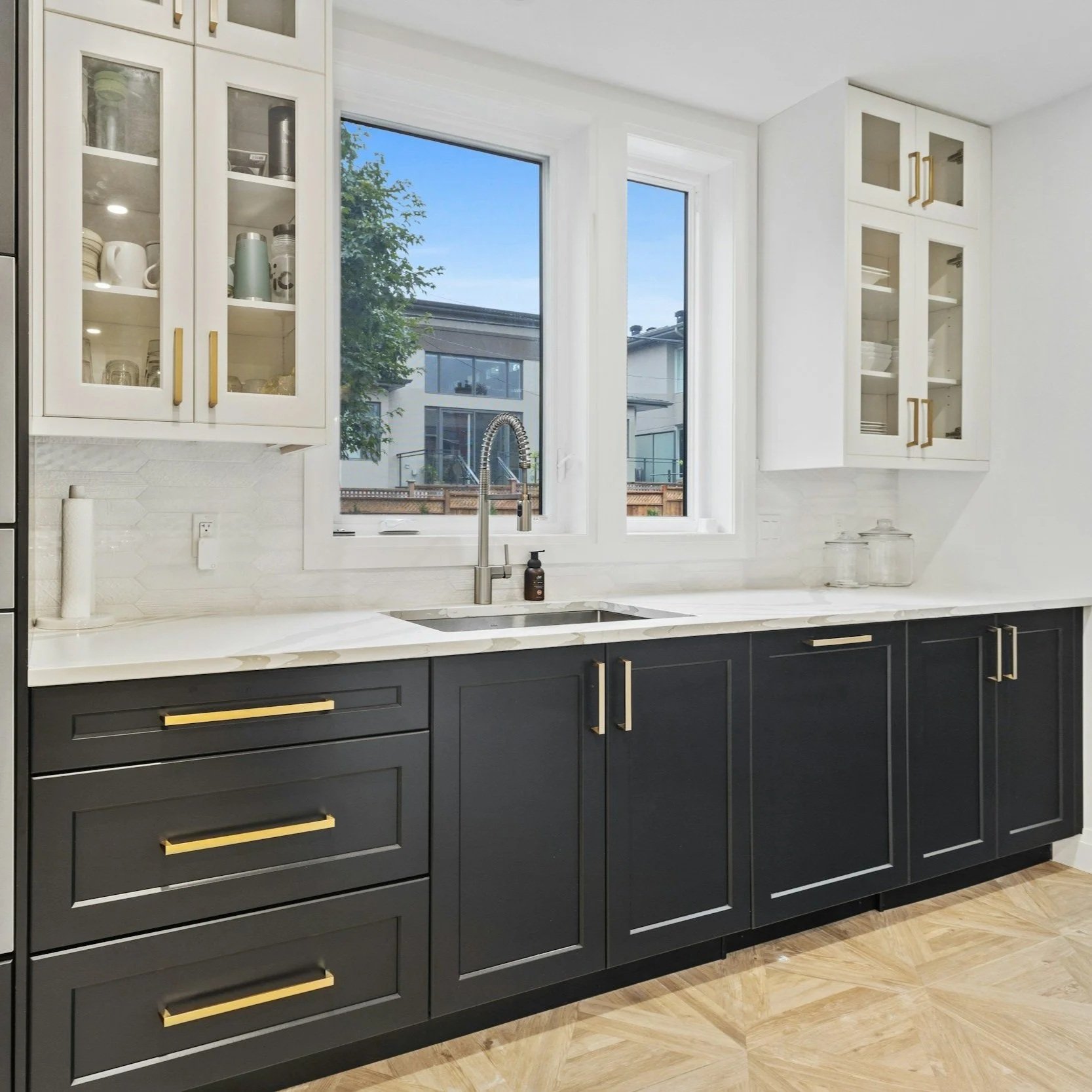
Modern kitchen cabinets featuring durable painted finishes, comparing Sherwin-Williams ProClassic and Benjamin Moore Advance for long-lasting cabinet performance.
I get this question every time a homeowner decides to repaint their kitchen instead of replacing it. They've done the research. They know wall paint isn't right for cabinets. They've narrowed it down to Sherwin-Williams ProClassic or Benjamin Moore Advance. And they want to know which one I'd use for their job.
I'm Mark Savino. I've been painting houses across Tampa Bay for more than 25 years, and my crews repaint dozens of kitchens a year — Carrollwood, South Tampa, Belleair, Palm Harbor, Westchase, Riverview. We buy both ProClassic and Advance. We've also used Emerald Urethane Trim Enamel, Cabinet Coat, and Breakthrough — products this article will mention because pretending the comparison is a clean two-way fight isn't honest. Here's how I actually decide on the job.
The Short Answer
If your cabinets are getting sprayed, on a production schedule, in a white or off-white, where you need them back in service fast — I'm reaching for ProClassic Acrylic-Alkyd. Faster recoat, harder near-term film, less yellowing on whites.
If your cabinets are getting brushed or rolled in a mid-tone or darker color, and you can afford a two-week cure window before the doors close — I'm reaching for Advance. Its leveling is the best you can get out of a brush, and the cured film is meaningfully tough.
And here's the part most comparisons skip: if you want a bright white that stays bright, neither one is the strongest pick. Emerald Urethane Trim Enamel, Cabinet Coat (Insl-X), or Sherwin's Breakthrough are all whiter and longer. We'll get there.
What "Better for Cabinets" Actually Means
A cabinet paint has to do four things a wall paint doesn't:
Cure to a hard film: Cabinet doors slam shut hundreds of times a month. Fingerprints land on door fronts. Bowls slide across shelves. The film has to cure to real hardness — not just dry to the touch.
Resist blocking: Blocking is when two painted surfaces stick together. Cabinet doors pressed against face frames overnight will pull paint off in chunks if the film isn't fully cured. Every cabinet paint has a "back in service" window. Closing the doors too early ruins the job.
Level out brush and roller marks: Cabinet panels read at eye level. Every roller stipple and brush stroke shows in the raked kitchen light. A real cabinet paint self-levels into a glass-smooth finish.
Hold its color: This is where alkyds get into trouble. Both ProClassic and Advance are alkyd hybrids — the chemistry that makes them level and cure hard also makes them yellow on whites over time. Some yellow more, some less. None of them stays perfectly white forever.
ProClassic wins on cure speed and white retention. Advance wins on leveling. Both fight blocking. Both will yellow somewhat on bright whites. That's the framework. Now the data.
The Data, Side-by-Side
Here's the spec comparison from the current manufacturer’s technical data sheets.
| Spec | SW ProClassic Acrylic-Alkyd | BM Advance Waterborne Alkyd |
|---|---|---|
| Type | Waterborne acrylic-alkyd hybrid | Waterborne alkyd |
| Sheens available | Satin, Semi-Gloss | Matte, Satin, Semi-Gloss, High-Gloss |
| Coverage per gallon | 350–400 sq ft | 400–500 sq ft |
| VOC | <50 g/L | 43.2 g/L (793 Semi-Gloss); varies by sheen |
| Dry to touch | 1–2 hrs at 77°F | 4–6 hrs at 77°F |
| Recoat time | 4 hrs | 16 hrs |
| Time to full hardness (manufacturer) | Not published on TDS | Up to 30 days per BM Advance 793 TDS (Limitations section) |
| Practical full cure (contractor consensus) | Roughly 7–14 days | Roughly 2–3 weeks |
| Brush vs spray | Sprays cleanly; brush can puddle on verticals | Brushes/rolls exceptionally; sprays well with 0.011 tip |
| Retail price per gallon | $75–$85 (varies by sheen, store, promo) | $84–$89 |
A note on what the table doesn't show: neither manufacturer publishes an ASTM hardness or block-resistance cycle number on the public TDS, so I can't put a hard durability number in this table. What the field shows after 25 years of cabinet jobs is that both products cure to real hardness — but Advance gets there slower, and during that slow cure window, the film is soft enough that homeowners get into trouble by closing doors too soon.
Where ProClassic Earns Its Spot
Spray application on a production schedule: When my crew sprays a kitchen, we want the doors flipped and back on the wall before the homeowner loses patience. ProClassic's 4-hour recoat allows us to apply multiple coats in a single day. Advance's 16-hour recoat stretches the job by a full extra day, sometimes two.
Whites that need to stay white: ProClassic Acrylic-Alkyd has a measurable edge over Advance on white retention in field experience. Both will yellow somewhat over time on bright whites — that's how alkyds work — but Advance yellows faster and more visibly. In a sunny South Tampa kitchen with afternoon light, that difference shows up at the two-year mark.
Cabinets going back into a working kitchen quickly: The faster cure means doors can close sooner without blocking damage. For a busy family that can't have an unusable kitchen for three weeks, ProClassic is the more practical pick.
SW account pricing and accessibility: Most painting contractors in Tampa Bay already have a Sherwin-Williams Property Services Account. We get net pricing, store credit, color matching, and same-day pickup. For a contractor running on a tight schedule, that ecosystem matters more than spec-sheet differences.
Where Advance Earns Its Premium
Brush and roller leveling: This is Advance's calling card. The long open time and high-flow chemistry let it self-level into a near-glass finish under a brush. If you're hand-painting cabinets — no spray rig, no booth — Advance is the best leveling waterborne enamel on the market. ProClassic doesn't match it brushed.
Mid-tone and dark colors: Yellowing on whites doesn't matter if the cabinet color is navy, charcoal, forest green, or burgundy. In those colors, Advance's superior leveling and final film hardness are pure benefits with no downside.
Low-odor application in occupied homes: Both products are waterborne and meaningfully lower in odor than traditional oil-based alkyds. Advance edges out ProClassic on smell in my experience — useful when the family is living in the house while we paint.
The final cured film: Once Advance fully cures (give it the full 2-3 weeks), the film is meaningfully hard — closer to old-school oil-based hardness than any other waterborne I've used. The trade-off is the wait.
What Each One Gets Wrong
ProClassic's weaknesses:
The acrylic-alkyd is thin. It runs and puddles on vertical surfaces if you brush too heavily. Spraying solves this; brushing requires technique and a light touch. Sheen mismatch between sprayed doors and rolled face frames is a known issue — they don't always read identical, even when they come from the same can. And the SW counter staff occasionally grabs the wrong ProClassic version — there's an Acrylic ProClassic, an Acrylic-Alkyd ProClassic, and an Alkyd ProClassic. Confirm the specific product before you leave the store.
Advance's weaknesses:
Yellowing on whites is a well-documented issue. Touch-ups from the original won't match the field paint after a year, because the field paint has yellowed and the touch-up paint hasn't. Blocking during the long cure window is the bigger practical problem — doors stuck to face frames pulling paint off in chunks is a real failure mode I've been called to fix on Advance jobs where the homeowner closed everything up after three days. And the slow recoat (16 hours) makes spraying multiple coats a multi-day job instead of a one-day job.
These aren't deal-breakers on either product. They're things to know before you spec one for a kitchen.
Two Things Most Comparisons Skip
A couple of items the SEO comparison articles never mention.
Neither one is the strongest pick for a bright-white kitchen that needs to stay bright: Both ProClassic and Advance are alkyds, and alkyds yellow on whites. Period. If you want a brilliant Snow White or Pure White kitchen that still looks brilliant in five years, the better picks are Sherwin Emerald Urethane Trim Enamel (a urethane-modified acrylic), Insl-X Cabinet Coat (a true acrylic), or Sherwin Breakthrough (a high-performance acrylic). All three are 100% acrylic — no alkyd chemistry to yellow. The leveling isn't quite as good as Advance, but the white stays white. For a Tampa homeowner painting a kitchen they plan to keep for ten years, I'll often recommend one of those three over either ProClassic or Advance specifically because of the white-retention issue.
Cabinets and trim aren't the same painting job: Some homeowners assume "trim paint = cabinet paint." Trim takes baseboard scuffs and door-frame bumps. Cabinets take fingerprints, splashes, and constant door slams. The cure-to-hardness requirement is higher for cabinets. Both ProClassic and Advance handle both jobs, but on cabinet jobs specifically, the cure window and blocking resistance matter more than they do on baseboards.
The Florida Factor
Tampa Bay humidity changes the math on cabinet paint. Here's how.
Humidity slows alkyd cure: Both ProClassic and Advance cure by oxidation — they need air contact and moderate humidity to harden. In Tampa summer (70-plus percent RH), the cure window stretches longer than spec. Advance's already-long 5-7 day minimum becomes 10-14 days in our climate. ProClassic's faster spec becomes a more average pace. Both products take longer to reach full hardness here than they would in Phoenix or Denver.
AC condensation matters: Cabinets near exterior walls in older Tampa homes — especially homes from the 1960s and '70s without modern vapor barriers — sometimes see condensation behind the box during peak summer. That moisture can interfere with cabinet paint adhesion if the prep wasn't right. We always check the back of base cabinets for damp wood before we start any cabinet repaint in those homes.
Sun exposure accelerates yellowing: A south-facing or west-facing kitchen window in Florida puts UV on white cabinet doors for nine months of the year. Yellowing happens faster here than in cloudier climates. This is a real reason to consider Emerald Urethane or Cabinet Coat instead of ProClassic or Advance on bright-white Tampa kitchens with strong natural light
Bathroom vanities follow the same rules: Everything above applies to bathroom vanity boxes and doors too, but humidity is worse — bathrooms run hot showers daily. For vanities, I lean toward the harder-cured acrylics (Cabinet Coat, Emerald Urethane) even more than for kitchen cabinets.
When the Customer Asks Me Which to Buy
Here's how the conversation usually goes in the kitchen during the walk-through.
If a homeowner in Carrollwood wants their oak cabinets painted Sherwin Pure White, can let the kitchen be out of service for three weeks, and we're spraying everything — I'm quoting Emerald Urethane Trim Enamel, not Advance. Pure White on Advance will read cream by year two. Emerald Urethane keeps the white.
If the same homeowner wants their cabinets painted navy or charcoal, can wait two weeks, and we're hand-brushing (smaller kitchen, no booth setup) — I'm quoting Advance. The leveling, the open time, and the final film hardness justify the longer cure window when yellowing isn't a factor.
If a homeowner in South Tampa wants a quick refresh on off-white cabinets, wants the kitchen back in a week, and we're spraying — I'm quoting ProClassic Acrylic-Alkyd. Faster cure, less yellowing than Advance, gets the homeowner back to cooking sooner.
If a landlord in Pinellas Park wants the cabinets in a turn unit refreshed before the next tenant — I'm quoting whichever product is on sale at the time. For a turn unit, the cabinets will be repainted again in five years anyway.
That's not me hedging. That's how the variables actually play out in real jobs.
What the Data Won't Tell You
Neither Sherwin-Williams nor Benjamin Moore publish ASTM hardness, block-resistance, or scrub-cycle numbers for either product on their public technical data sheets. The durability claims rest on chemistry descriptions and marketing language, plus field experience from contractors. So everything in this article about hardness, blocking, and longevity comes from 25 years of watching both products succeed and fail on real cabinet jobs — not from independent lab data I can hand you a number from.
Consumer Reports doesn't publish public-facing cabinet/trim enamel comparisons that I could verify without a subscription. So I'm not citing CR scores at all here.
Both products have been reformulated over the past several years. The ProClassic Acrylic-Alkyd in the can today is not the same as it was in 2018. The same goes for Advance. Whatever blog post you read from five years ago about these products may not apply to the formula on the shelf in 2026. I keep buying both and watching how the current formula performs across active jobs.
And the alkyd-yellowing issue I've talked about throughout this article is real, repeatable, and well-documented across contractor forums — but it's gradual. A homeowner who repaints their kitchen in five years won't notice it. A homeowner planning to keep the kitchen for ten or fifteen years will.
Frequently Asked Questions
No. Wall paint cures too soft, won't resist fingerprints or blocking, and will look beat up within months. Cabinets need a real cabinet enamel — ProClassic, Advance, Emerald Urethane, Cabinet Coat, or Breakthrough. Don't try to save money by using leftover wall paint here.
For Advance, the manufacturer says 5-7 days minimum before normal use. In humid Tampa, I tell homeowners to wait a full two weeks before closing doors against face frames if they want zero blocking risk. For ProClassic Acrylic-Alkyd, give it at least a week. The longer you wait during the cure, the better the long-term result.
Not on ProClassic or Advance. Both are alkyds, and both yellow on whites over time. Less on ProClassic, more on Advance, but neither stays perfectly white. If white retention matters, switch to Emerald Urethane Trim Enamel, Cabinet Coat, or Breakthrough — all three are 100% acrylic and don't have the alkyd yellowing issue.
Light scuff with 320-grit between coats helps both products lay down clean. It's not strictly required on ProClassic if the first coat is smooth, but for Advance, a light scuff between coats produces a visibly better final finish.
Both can be brushed or rolled, but Advance was specifically designed for brush-and-roll leveling — that's its strongest application method. ProClassic Acrylic-Alkyd brushes are okay, but perform better when sprayed. If you don't have spray equipment, lean on Advance.
Long cure is normal for Advance, especially in humid climates. Manufacturer minimum is 5-7 days; real-world full cure in Tampa Bay is closer to 2-3 weeks. Closing doors during this window is the biggest cause of cabinet paint failure.
ProClassic is at any Sherwin-Williams store across Tampa, St. Petersburg, Clearwater, Brandon, Carrollwood, and the surrounding area. Advance is at independent Benjamin Moore dealers in Tampa, St. Pete, and the suburbs. Contractor accounts at both unlock discounts; ask about a pro account if you're painting more than just the kitchen.
Yes, always. Even though both products are marketed as paint-and-primer, cabinet substrates need a real bonding primer first — Sherwin Extreme Bond or BIN shellac-based primer for slick laminate or oak grain, a stain-blocking primer for tannin bleed. Skipping primer is the most common reason cabinet paint jobs fail at year one.
Use ProClassic Acrylic-Alkyd when you're spraying, on a tight schedule, in white or off-white, and need the kitchen back in service fast.
Use Advance when you're brushing or rolling, in a mid-tone or darker color, with two weeks of patience for a full cure.
Use Emerald Urethane Trim Enamel, Cabinet Coat, or Breakthrough when you want a bright white that actually stays white for ten years.
And on every cabinet job — regardless of which paint — prime properly, sand between coats, and don't lcose the doors before the film is fully cured. The product matters. The technique and the patience matter more.
If you're trying to spec cabinet paint for a Tampa Bay kitchen and want a second opinion from someone who's actually sprayed all five of these products onto real cabinets, give us a call at (813) 831-5433 or request a free in-home estimate. I'll walk the kitchen with you, look at the substrate, talk through the schedule, and recommend the right product for your specific job.
