Kilz vs Zinsser Primer: Which One Actually Blocks Stains? A Tampa Painter's Take After 25 Years
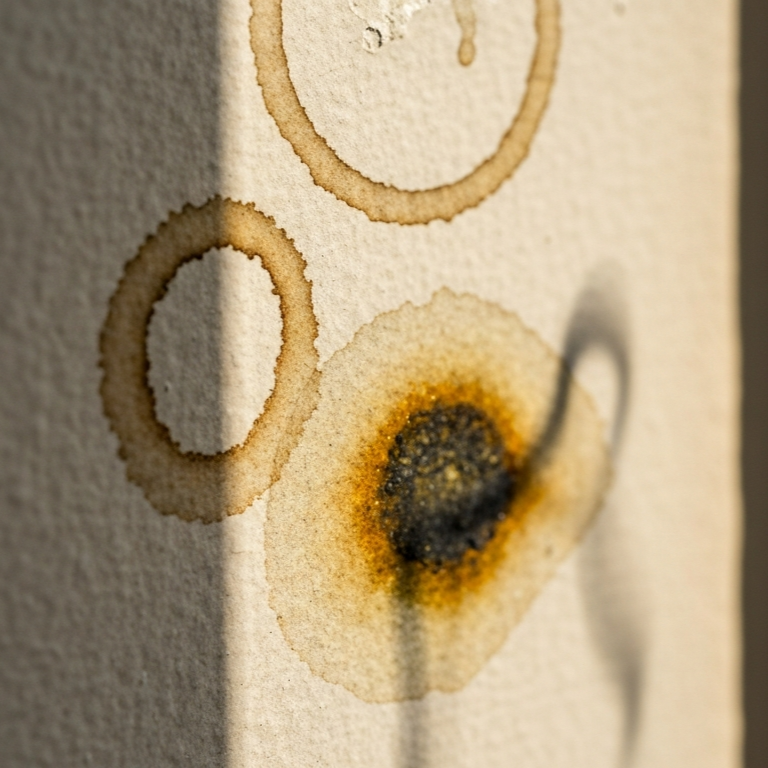
Water stains and burn marks on painted wall demonstrating why stain-blocking primers like Kilz and Zinsser are sometimes necessary.
I get this question every couple of weeks. A homeowner standing in the Home Depot primer aisle, looking at Kilz on one shelf and Zinsser on the other, both with confident marketing about stain-blocking, and wanting to know which one actually works on the specific stain they're trying to cover. The honest answer isn't one beats the other. The honest answer is different primers beat different stains, and the smart contractor keeps three on the truck.
I'm Mark Savino. I've been painting houses across Tampa Bay for more than 25 years. We've primed over hurricane water damage in Pinellas, smoke damage from kitchen fires in Carrollwood, knotted pine paneling from 1970s Belleair cottages, and nicotine yellow on rental flips in Pinellas Park. We buy Kilz. We buy Zinsser. We pick the one that fits the stain. Here's the framework.
The Short Answer
For wood knots, smoke damage, nicotine, pet odors, or anything you've already tried to prime and watched bleed back through — reach for Zinsser B-I-N shellac-based primer. It's the closest thing the industry has to a universal stain killer. It's also nearly twice the price of every other primer on this list, which is why it's not your everyday choice.
For everyday drywall priming, light stains, repaints, and bare drywall — Zinsser Bulls Eye 1-2-3 or Kilz 2 does the job at half the cost. They're nearly interchangeable.
For exterior wood, cedar, redwood, or tannin-bleeding lumber — Zinsser Cover Stain (oil-based). It's specifically engineered for the tannin block.
Three primers, three jobs. No single can does everything well. Anyone telling you otherwise is selling, not painting.
What "Blocks Stains" Actually Means
People treat all stains like one thing. They aren't. A primer that handles a water ring won't necessarily seal nicotine. A primer that locks tannin from cedar might not block a sharpie line your kid drew on the wall. Seven different stain categories show up on real Tampa Bay jobs, and they each respond differently:
Wood knots and tannin. Pine knots, cedar siding, redwood — these bleed brown or amber resin through latex paint within weeks, even months later. Only shellac and oil reliably lock them.
Water stains. The brown ring on the ceiling after a roof leak. Light ones come out with water-based primers; heavy ones (think hurricane damage) need oil or shellac.
Smoke and fire damage. Kitchen grease fires, house fires, candle soot. This is shellac territory — restoration contractors don't even argue this one.
Nicotine. Yellow walls from decades of smoking. Shellac is the practical answer; oil works, but the odor lingers.
Pet odors and urine. Animal stains and the smells that come with them. Shellac and specialty water-based "max" primers handle these.
Ink, marker, crayon, pencil. Light stains a kid leaves on the wall. Standard water-based primers handle this.
Grease and handprints. Around light switches, behind couches, and around the kitchen entry. Light water-based primers work.
The reason you can't pick one "best primer" is that no single primer can handle all seven well. Different chemistries solve different problems.
The Data, Side-by-Side
Here's the comparison straight from the manufacturer’s product pages.
| Product | Type | Best for | Coverage per gallon | Dry / Recoat | Cleanup | Retail (1 gal) |
|---|---|---|---|---|---|---|
| Zinsser B-I-N | Shellac | Worst stains: smoke, nicotine, knots, water, pet odor | ~400 sq ft | 45 min / 1 hr (2 hr for knots) | Ammonia or denatured alcohol | ~$56–$80 |
| Zinsser Cover Stain | Oil-based | Exterior wood, cedar/redwood, heavy water stains | ~400 sq ft | 35 min / 2 hrs | Mineral spirits | ~$34.98 |
| Zinsser Bulls Eye 1-2-3 | Water-based | Drywall, light stains, everyday priming | 400–450 sq ft | 30 min / 1 hr | Soap and water | ~$30–$35 |
| Zinsser Smart Prime | Water-based premium | Tougher water-based applications | ~400 sq ft | 30 min / 1 hr | Soap and water | Mid-tier |
| Kilz Original | Oil-based | Heavy water stains, mid-range stain block | 300–400 sq ft | 30 min / 1 hr | Mineral spirits | ~$39.98 |
| Kilz 2 All-Purpose | Water-based | Drywall, light stains, everyday priming | 300–400 sq ft | 30 min / 1 hr | Soap and water | $22.98 |
| Kilz Restoration (formerly MAX) | Water-based premium | Heavy water, smoke, pet stains in water-based | 300–400 sq ft | 30 min / 1 hr | Soap and water | ~$32–$47 |
| Kilz Premium | Water-based | Mid-range stains, general primer | 300–400 sq ft | 30 min / 1 hr | Soap and water | $34.98 |
A note on what the table doesn't show: VOC numbers and ASTM stain-blocking cycle counts aren't published on the consumer-facing product pages for most of these primers. Both manufacturers state water-based products are low-VOC and oil/shellac products are higher-VOC, but the exact g/L figures live in the full TDS PDFs and vary by sheen and SKU. For most Tampa repaints, the stain-blocking chemistry matters more than the VOC number.
Where Zinsser B-I-N Earns Its Price
B-I-N is the most expensive primer on this list — roughly twice the price of Bulls Eye 1-2-3 — and it earns the premium in specific situations. Here's where it actually pays off:
Wood knots that have bled through previous paint jobs. I've seen pine paneling in Belleair Beach cottages where the homeowner primed twice with latex, and the knots still showed through. Shellac locks them in one coat. Nothing else does this reliably.
Smoke and fire damage restoration. When we get called after a kitchen fire or a chimney backdraft in a Pinellas Park rental, B-I-N is what goes on first. Some insurance carriers won't even pay for restoration jobs primed with anything else for smoke damage — that's how established this is in the trade.
Nicotine yellow on rental flips. Old smoker walls turn that distinct yellow that bleeds through latex paint within a month if you don't lock it down properly. Cover Stain handles it, but the smoke smell lingers in the room for weeks. B-I-N seals it, and the room is odor-free once the primer flashes off.
Pet urine on subfloors and lower walls. Cat urine and dog accidents soak into wood and drywall and keep emitting odor for months, even after cleaning. B-I-N is the sealant of choice for restoration.
Hurricane water damage. Tampa Bay gets the worst of it. After Helene and after the seasonal storms, we get calls to prime over water-stained drywall ceilings and walls. Light stains, water-based works. Heavy brown rings from sustained water exposure — B-I-N every time.
Where Bulls Eye 1-2-3 or Kilz 2 Is the Smarter Buy
If B-I-N is the right answer, why do we buy Bulls Eye 1-2-3 and Kilz 2 in five-gallon buckets? Because B-I-N is expensive, finicky, and overkill for most jobs.
Bare drywall in new construction or remodels. Plain drywall doesn't have stains to block — it needs a primer to seal the porosity and give the topcoat a uniform surface to bond to. Bulls Eye 1-2-3 or Kilz 2 does this perfectly at a third the cost of B-I-N.
Light water stains. A single ring from a one-time roof leak that's already been repaired. Water-based primers handle this. Don't pay B-I-N money for a B-I-N job.
Color changes from one mid-tone to another. When the only "problem" is hiding the previous color, Bulls Eye 1-2-3 or Kilz 2 spot-primes patches, and gives a uniform base. B-I-N would work, but it's unnecessary.
Repaints on previously primed walls. When you've already got a primed substrate, and you're just freshening the topcoat, a real stain-blocking primer is overkill. A water-based primer-sealer is sufficient.
For our crew doing volume Tampa Bay repaints, Bulls Eye 1-2-3 is the workhorse. We probably buy fifteen gallons of it for every one gallon of B-I-N
Where Cover Stain Fills the Gap
Zinsser Cover Stain is the oil-based primer most contractors forget about until they need it. Here's where it earns its place:
Exterior wood, cedar, and redwood. These woods bleed tannin even through good acrylic paint. Cover Stain's oil chemistry locks the tannin in. B-I-N is interior only, so you can't use shellac outside. Cover Stain is the answer.
Exterior knots on cedar shake siding, redwood trim, and pine fascia. Same reason. Oil locks resin.
Heavy water stains where you don't want shellac's price tag. A middle ground when the stain is too heavy for water-based, but you can't justify B-I-N's cost on a whole-room job.
The downside: Cover Stain smells aggressive, cleans with mineral spirits, and takes longer to dry than the water-based primers. For interior work where odor matters, B-I-N is faster and cleaner once the alcohol flashes off.
What Each One Gets Wrong
B-I-N's weaknesses. It's expensive — nearly twice the cost of every other primer here. It dries fast (good for production, hard on tools — if you don't clean the brush within an hour, it's done). Cleanup requires ammonia or denatured alcohol, not water. And it's not for exterior or for substrates that need to flex (the shellac film is harder and more brittle than oil or latex).
Cover Stain's weaknesses. The smell is real. Even the low-VOC version lingers in a sealed room. Cleanup is mineral spirits, which means hazmat disposal in a regulated jurisdiction. The film takes longer to fully cure than the water-based primers — if you topcoat too soon, you can see telegraphing in raked light.
Bulls Eye 1-2-3 and Kilz 2's weaknesses. They're light-duty. Try them on a real water stain or a knot, and the stain bleeds through within weeks. They're not stain-killers in the B-I-N sense — they're stain-sealers for everyday situations. Mismatching them to a serious stain is the most common mistake I get called to fix.
Kilz Original's weaknesses. It's a solid oil-based primer at a fair price, but the field consensus is that Zinsser Cover Stain and B-I-N outperform it on the worst stains. For restoration jobs covered by insurance, some carriers explicitly don't accept Kilz oil as a smoke sealer. Pros lean toward Zinsser on the toughest cases.
Kilz Restoration's weaknesses. Marketed as water-based with the performance of oil and shellac. In practice, it's better than Kilz 2 on heavy stains but doesn't match B-I-N on the worst ones. A reasonable middle option if you're trying to avoid solvent cleanup.
Two Things Most Comparisons Skip
The "best primer" question is the wrong question. Every other Kilz-vs-Zinsser article tries to crown a single winner. There isn't one. Different primers solve different problems, and a contractor who only owns one primer is going to fail on jobs that don't match what they own. The smarter question is: which kit do I keep on the truck? The answer for most Tampa Bay residential work: Bulls Eye 1-2-3 for everyday, Cover Stain for exterior tannin, B-I-N on hand for emergencies.
Spraying B-I-N is technical work, not DIY work. B-I-N is thin, fast-drying, and aggressive on equipment. We spray it with dedicated tips and clean the rig with denatured alcohol immediately. If a homeowner reads about B-I-N's stain-blocking power and tries to spray it with a borrowed rig — they'll ruin the equipment, the room, and probably the topcoat. For DIYers, brush or roll B-I-N. For pros, dedicate one sprayer setup to it and clean meticulously.
The Florida Factor
Tampa Bay climate shifts the priority on a few primer decisions.
Hurricane water damage is a real category here. Most of the country doesn't deal with sustained tropical rain pushing water into ceilings and walls. We do. After every named storm, we get calls to prime over heavy water staining on ceilings, drywall, and trim. For light water rings, water-based handles. For the heavy stuff — brown circles bigger than a dinner plate, ceiling drywall that's been replaced — B-I-N is the right call. We don't take shortcuts here.
Humidity slows oil primer cure. Cover Stain and Kilz Original dry slower in 75-plus percent Tampa summer humidity. Plan around it — don't topcoat too soon or you'll see ghosting. B-I-N's shellac flashes faster and isn't as affected.
Mildew on bathroom walls is a constant pressure. Both Kilz and Zinsser have mildewcide additives in some lines. For a Tampa primary bath with chronic mildew issues, we wash the surface with a real mildewcide rinse before priming, regardless of primer choice. The primer is a sealing step; the cleaning is what actually kills the mildew.
Saltwater exposure on coastal homes. Houses in Belleair, Indian Rocks, and Madeira Beach get salt deposits on exterior wood and trim. The salt interferes with primer adhesion if you don't wash and rinse first. Both Kilz and Zinsser have exterior primers; prep matters more than which can.
When the Customer Asks Me Which to Buy
Here's how the conversation usually goes on a walkthrough.
If a homeowner in Pinellas Park has a one-time water ring on the ceiling from an old leak that's been fixed — we're priming with Kilz 2 or Bulls Eye 1-2-3. Light water stain, water-based handles.
If the same homeowner had hurricane damage with replaced drywall and visible water staining on the framing — we're priming with B-I-N. Don't gamble on a heavy water stain.
If somebody in Carrollwood just bought a 1970s home with knotty pine paneling they want painted white — we're priming with B-I-N. Knots without shellac will bleed through within a month.
If a property manager has a turn unit in Pinellas Park where the previous tenant smoked — we're priming with B-I-N if the budget allows, Cover Stain if it doesn't. Either way, never water-based on a nicotine job.
If we're repainting cedar trim on a Belleair coastal home — we're priming with Cover Stain. Tannin and exterior shellac doesn't apply.
If a customer in Riverview is doing a whole-house freshen with no real stains — we're priming with Bulls Eye 1-2-3 on the patches and spots, and just topcoating elsewhere. Don't pay for stain-blocking you don't need.
That's not me hedging. That's how chemistry actually plays out in real jobs
What the Data Won't Tell You
I want to be honest about what's missing.
Neither Kilz nor Zinsser publishes head-to-head ASTM stain-blocking cycle data on the consumer pages. The verdicts in this article come from 25 years of field experience and contractor forum consensus, not lab tests with hard numbers. I'm confident in the verdicts because the same advice shows up across decades of PaintTalk, ContractorTalk, and DIY Chatroom threads — but I can't hand you a single number to prove B-I-N beats Cover Stain on smoke.
Both manufacturers have reformulated their primer lines over the years. The Kilz Original from 2010 isn't the same as the Kilz Original 2026. Same for Zinsser. Specs carry through; minor chemistry shifts happen quietly. We keep buying and watching how they perform.
Insurance restoration standards vary by state and carrier. The "Kilz oil isn't accepted by some insurers for smoke damage" point in this article comes from contractor forum reports — your specific carrier may have different rules. Check before specifying.
Frequently Asked Questions
For the worst stains — smoke, nicotine, knots, pet odors, heavy water damage — absolutely. For everyday drywall priming and light stains, no. Buy a gallon and keep it on the shelf for emergencies; use cheaper primers for routine work.
Light stains, yes. Heavy stains (brown rings, hurricane damage, sustained water exposure), no. Water-based primers seal porosity but don't block heavy tannin or pigment bleed-through. Use B-I-N or Cover Stain.
Kilz Original is oil-based, designed for medium stains and good general priming. Kilz Restoration is water-based with marketing claims that match Cover Stain or B-I-N for tough stains. In practice, Restoration is better than Kilz 2 on heavy stains but doesn't quite match B-I-N. It's a reasonable middle option.
Most likely, it dried too fast in the Tampa heat, and you didn't maintain a wet edge on the primer. Bulls Eye 1-2-3 sets up quickly in hot conditions. Work in smaller sections, keep the edge wet, and topcoat after a full 1-hour recoat window.
Yes. Even with paint-and-primer-in-one products, a dedicated PVA or all-purpose primer like Bulls Eye 1-2-3 or Kilz 2 is the right move on bare drywall. The "self-priming" claim works on previously painted walls; bare drywall is too porous.
No. B-I-N is interior only. For exterior knots and tannin blocks, use Cover Stain.
Yes, because shellac is dissolved in denatured alcohol. The smell flashes off within 30 minutes and the room is odor-free. Ventilate while you're applying. Don't confuse the alcohol smell with the bad smell of oil-based primers, which lingers for days.
Most are at Home Depot, including the Kilz line and Zinsser Bulls Eye 1-2-3, Cover Stain, and B-I-N. Lowe's also carries Zinsser. Specialty paint stores in Tampa, St. Petersburg, Clearwater, and Brandon also stock them, sometimes at better contractor pricing.
Buy Zinsser B-I-N when you have a real problem — knots, smoke, nicotine, pet odors, or heavy water damage. It's expensive, finicky, and worth every penny when the stain demands it.
Buy Zinsser Cover Stain when you're priming exterior wood, cedar, redwood, or tannin-bleeding lumber. It's the oil-based answer when shellac can't go outside.
Buy Zinsser Bulls Eye 1-2-3 or Kilz 2 when the job is everyday priming — bare drywall, light stains, repaints, color changes. Half the cost, plenty of performance for the job.
And on every job — clean the surface first. Even the best stain-blocking primer fails over a wall that wasn't washed, wasn't dried, or wasn't scuff-sanded. The primer is the second step. The cleaning is the first.
If you're trying to figure out which primer to use on a specific stain in a Tampa Bay home and want a second opinion from someone who's primed over hurricane damage, kitchen fires, and 1970s knotty pine, give us a call at (813) 831-5433 or request a free in-home estimate. I'll look at the stain, recommend the right primer, and quote the prep work so you know what's coming.
