What Makes Mildew Grow on Exterior Paint — and How to Stop It
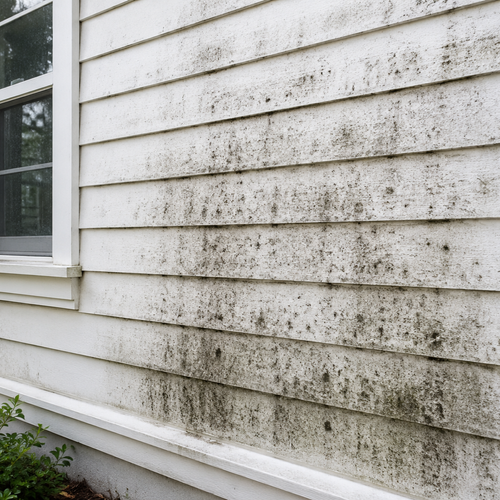
Quick Answer: Mildew grows on exterior paint where there's moisture, warmth, and shade — exactly the conditions a hot, humid climate provides. The mildew (a type of mold) feeds on moisture and organic material on the painted surface, thriving in damp, shaded, poorly ventilated areas like north-facing walls, spots under eaves, and areas near sprinklers or vegetation. It shows up as black, green, or gray spots and streaks on the paint. To stop it: clean the existing mildew off properly, address the moisture sources feeding it (drainage, sprinklers, vegetation, ventilation), and when repainting, use a quality paint with mildew-resistant properties. In humid climates, managing moisture is the key to keeping it from coming back.
If your home's exterior paint is developing black, green, or gray spots and streaks, you're likely looking at mildew — and in a hot, humid climate, it's an extremely common problem. Mildew thrives in exactly the conditions humid regions provide, and it will keep coming back unless you address what's feeding it. Understanding what causes mildew to grow on paint and how to stop it helps you keep your home's exterior clean.
What Mildew Is and Why It Grows
Mildew is a form of mold — a fungus that grows on surfaces where conditions favor it. On exterior paint, mildew grows because it has what it needs: moisture, warmth, and organic material to feed on. A hot, humid climate provides abundant moisture and warmth, which is why mildew is so common on exteriors in these regions. The mildew feeds on the moisture and any organic matter (dirt, pollen, residue) on the painted surface, and it spreads as spots and streaks. So mildew growth isn't really about the paint failing — it's about the surface providing the moisture and conditions mildew needs. That's the key to understanding both why it appears and how to stop it.
Where Mildew Thrives
Mildew doesn't grow evenly — it concentrates where conditions are dampest and shadiest. The areas most prone to mildew are those that stay moist and don't dry out quickly: shaded, north-facing walls that get little sun, spots under eaves and overhangs, areas with poor air circulation, and places near moisture sources like sprinklers, downspouts, or dense vegetation that keeps the wall damp. Sun and air movement dry surfaces and discourage mildew, so the shaded, still, damp spots are where it flourishes. Noticing that mildew is worst in these specific areas is a clue that moisture and lack of drying are driving it, which points directly to the solution.
| Mildew-prone area | Why |
|---|---|
| North-facing/shaded walls | Little sun, stays damp |
| Under eaves and overhangs | Sheltered, poorly ventilated |
| Near sprinklers or downspouts | Direct moisture source |
| Near dense vegetation | Holds moisture against the wall |
| Poorly ventilated spots | Air doesn't dry the surface |
How to Remove Existing Mildew
The first step to stopping mildew is removing what's already there — properly, not just painting over it. Mildew should be cleaned off the surface because painting over it without removing it lets it continue and bleed through the new paint. Proper cleaning removes the mildew from the painted surface, so the area is clean. This cleaning is essential both to restore the appearance and, if you're repainting, to prepare the surface so mildew doesn't simply grow through the new coat. Simply painting over visible mildew is a common mistake that doesn't solve the problem, because the mildew and the conditions feeding it are still there.
How to Stop It From Coming Back
Removing mildew is only half the battle — to keep it from returning, you have to address the moisture and conditions feeding it. That means tackling the moisture sources: adjusting sprinklers so they don't spray the walls, ensuring good drainage so water doesn't pool against the house, trimming back vegetation that holds moisture against the wall, and improving air circulation where possible so surfaces dry. Reducing moisture and increasing drying in mildew-prone areas removes the conditions mildew needs. And when repainting, using a quality exterior paint with mildew-resistant properties helps the new paint resist mildew growth. So the lasting solution combines clean removal, moisture management, and mildew-resistant paint — in a humid climate, the moisture management is especially important, since the humidity itself is a constant.
Look at where the mildew is worst and trace the moisture source. If it's heaviest where a sprinkler hits the wall, near a downspout, or behind a shrub pressed against the house, that's your culprit. Fixing that specific moisture source — redirecting the sprinkler, improving drainage, or trimming the plant — does more to stop mildew than cleaning alone.
Why Addressing the Cause Matters
The reason mildew keeps coming back for many homeowners is that they clean it or paint over it without addressing the moisture feeding it. Because mildew grows wherever the moisture, warmth, and conditions are right, cleaning alone gives only temporary results if those conditions remain — the mildew simply returns. The lasting fix is to remove the mildew, manage the moisture sources and ventilation, and use mildew-resistant paint when repainting. In a hot, humid climate where moisture is abundant, this combined approach is what actually keeps mildew off your exterior paint. A painting professional can properly clean mildew, address surface preparation, and use quality mildew-resistant paint for a lasting result, and advise on the moisture issues contributing to the growth.
Frequently Asked Questions
Mildew, a form of mold, grows where there's moisture, warmth, and organic material to feed on — conditions a hot, humid climate provides in abundance. It feeds on moisture and dirt or residue on the painted surface and thrives in damp, shaded, poorly ventilated spots. So mildew growth is driven by the surface staying moist, not by the paint itself failing, which is why managing moisture is the key to stopping it.
In the dampest, shadiest, least-ventilated areas that don't dry quickly: north-facing or shaded walls, spots under eaves and overhangs, areas near sprinklers, downspouts, or dense vegetation, and poorly ventilated spots. Sun and air movement dry surfaces and discourage mildew, so it concentrates where the wall stays damp and still. Noticing where its worst points are to the moisture source feeding it.
No. Painting over mildew without removing it lets the mildew continue and bleed through the new paint, so it doesn't solve the problem. Mildew must be properly cleaned off the surface first, both to restore the appearance and to prepare the surface so mildew doesn't grow through the new coat. Painting over visible mildew is a common mistake that leaves the mildew and its conditions in place.
Clean the mildew off the surface properly to remove it, rather than just painting over it. Then address the moisture sources feeding it — adjust sprinklers, improve drainage, trim back vegetation, and improve air circulation — and when repainting, use a quality paint with mildew-resistant properties. The combination of clean removal, moisture management, and mildew-resistant paint is what removes the mildew and keeps it from returning.
By addressing the moisture and conditions feeding it, not just cleaning. Adjust sprinklers so they don't hit the walls, ensure good drainage, trim vegetation that holds moisture against the house, and improve air circulation so surfaces dry. Using mildew-resistant paint when repainting also helps. In a humid climate, managing moisture is essential, since the humidity is constant — cleaning alone gives only temporary results if the conditions remain.
It helps. A quality exterior paint with mildew-resistant properties is more resistant to mildew growth than ordinary paint, so it's a valuable part of the solution when repainting. However, it works best combined with proper mildew removal and moisture management — paint alone can't overcome a constant moisture source. In humid climates, mildew-resistant paint plus addressing the moisture conditions gives the most lasting protection.
Stop the Moisture to Stop the Mildew
Mildew grows on exterior paint wherever moisture, warmth, and shade combine — common conditions in a hot, humid climate. It concentrates in damp, shaded, poorly ventilated spots and returns if you only clean or paint over it. The lasting fix is to properly remove the mildew, address the moisture sources and ventilation feeding it, and use mildew-resistant paint when repainting. In a humid climate, managing the moisture is what keeps your exterior paint clean for good.
Mildew keeps coming back on your exterior paint — Get it properly cleaned, the moisture addressed, and mildew-resistant paint applied. Mark's Painting serves Tampa Bay and surrounding areas. Licensed & Insured. Call (813) 831-5433.
