Exterior Paint Blistering and Bubbling? What’s Causing It
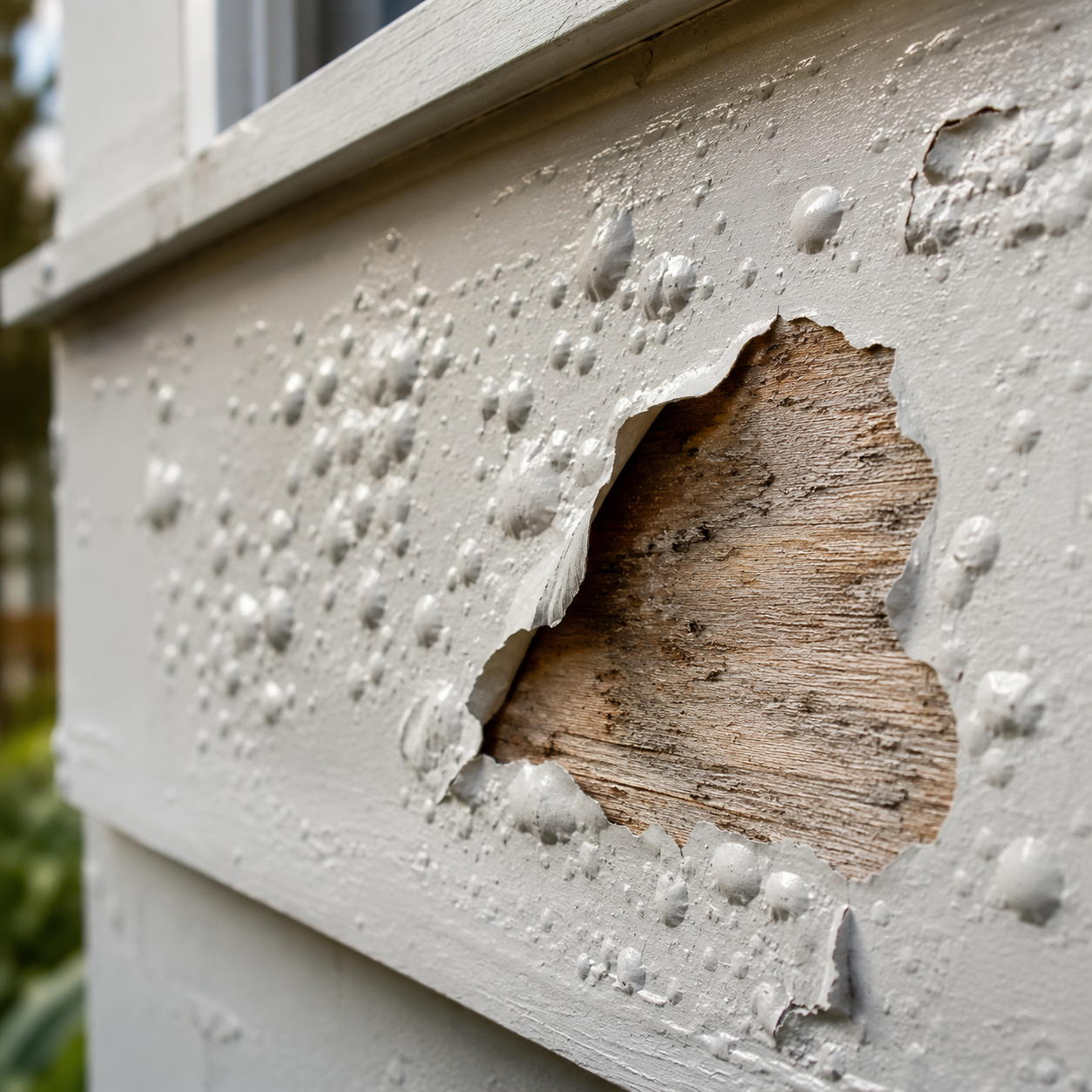
Quick Answer: Those bubbles are the paint film lifting off the surface, and there are two main causes. Heat blistering happens when paint is applied in direct sun or on a too-hot surface, so the top skins over before it can bond. Moisture blistering happens when water trapped behind the film vaporizes and pushes it off. The quick way to tell them apart: pop a blister — bare surface underneath means moisture, an older coat underneath means heat. The fix depends on which, but both come down to prep and timing.
You painted the house, it looked great, and a few weeks later, the wall is dotted with bubbles like it's breaking out in a rash. Blistering paint is one of the most common exterior failures, and in a place like Tampa Bay — relentless sun, heavy humidity, and an afternoon storm on most summer days — the conditions practically invite it. The good news is that blistering has specific, understandable causes, and once you know which one you're dealing with, the fix is clear.
What a Blister Actually Is
A blister is a spot where the paint film has lost its grip on the surface beneath it and lifted into a bubble. Paint is supposed to bond tightly to what it's painted on; a blister is that bond failing in a small pocket. According to the major paint manufacturers, it comes down to heat, moisture, or both — and telling which is the whole game, because the two have different fixes.
Heat Blistering vs. Moisture Blistering
The two causes look similar on the wall but come from opposite problems.
Heat blistering happens when the paint dries too fast. Apply it in direct sunlight or onto a surface that's too hot — Sherwin-Williams flags surface temperatures over 100°F — and the top of the film skins over before it has a chance to properly adhere to the surface below. With the surface not fully bonded, the film lifts. This is the classic "we painted the sunny side of the house at 2 p.m. in July" failure.
Moisture blistering is the opposite: water gets behind the film and pushes it off. That water can come from rain or dew settling on fresh latex before it fully cured, from humidity, or from moisture migrating out through the wall from a leak or a damp interior. The trapped water vaporizes and lifts the paint into a bubble. In a humid climate, this is the more insidious of the two, because the water is often coming from behind the wall, not from the weather that day.
To tell them apart, break open a blister and look at what's underneath. If you see bare wood, stucco, or masonry at the bottom, the blister goes all the way down — that's moisture, and you have to find the water source before repainting. If you see an older coat of paint underneath, only the top layer lifted — that's heat blistering.
Why It Happens So Often Here
Gulf Coast conditions stack the deck. The intense sun pushes surface temperatures well past the safe range for painting on any wall facing it in the afternoon, which drives heat blistering. The humidity and the near-daily summer storms feed moisture blistering — paint that isn't given enough dry time before dew or rain, or walls that never fully dry out, blister from behind. And most homes here are stucco or concrete block, which adds a wrinkle of its own.
Stucco and masonry retain moisture and are highly alkaline when fresh, and they need proper preparation to accept and hold paint. Skipping a masonry primer, painting over efflorescence (the white crystalline deposits that signal moisture moving through the wall), or coating a wall that's still damp inside all set up a blister. On the block, the moisture must be addressed before the coating goes on, not after.
| Cause | What triggers it | The fix |
|---|---|---|
| Heat blistering | Painting in direct sun or on a hot surface | Repaint in cooler conditions; surface below ~90°F |
| Moisture blistering | Water behind the film; humidity; dew/rain too soon | Find and fix the moisture source first |
| Poor prep | No primer, dirty or damp surface, efflorescence | Clean, dry, prime — especially on stucco/masonry |
| Wrong timing | Painting before rain or in peak heat | Follow the can's temperature and dry-time window |
How to Fix It Right
Patching over blisters without addressing the cause just buys you a few weeks before they come back. The proper sequence is the same one that prevents them: scrape and sand off the loose, blistered paint down to a sound surface. Then deal with the cause — if it's moisture, find and fix the source (a leak, missing caulk, a gutter dumping water on the wall, poor drainage) and let everything dry; if it's heat, you simply need to repaint under the right conditions. Clean the surface, prime any bare spots — a masonry primer on stucco and block — and repaint when the surface is cool and dry, with enough time before the next dew or storm. Painting early in the day on the shaded side of the house, following the temperature and dry-time window on the can, is what keeps the new coat from blistering like the old one.
For a Tampa Bay home, that timing and prep is most of the battle, which is why a proper exterior paint job here is as much about washing, drying, priming, and scheduling around the heat and storms as it is about the paint itself. A thorough pressure wash and prep before painting removes the dirt and contaminants that keep paint from bonding in the first place.
Frequently Asked Questions
Because the film lifted off the surface, usually from heat or moisture. If you painted in direct sun or on a hot wall, the surface dried too fast to bond — heat blistering. If water got behind it from humidity, dew, rain too soon, or a leak in the wall, the trapped moisture pushed it off. Popping a blister to see what's underneath tells you which.
Break open a blister and look at the bottom. Bare surface — wood, stucco, or masonry — means the bubble goes all the way down, which points to trapped moisture you must fix before repainting. An older layer of paint at the bottom means only the new coat lifted, which points to heat from painting in the sun or on a hot surface.
You can scrape and sand the loose paint, but repainting without fixing the cause invites the blisters right back. If moisture is the culprit, you have to find and stop the water source first. If heat is the cause, repaint in cooler conditions. Either way, clean, dry, and prime the surface before the new coat goes on.
Stucco and masonry hold moisture and are highly alkaline when fresh, so they need the right prep — a masonry primer and a fully dry, clean surface. Painting over a damp wall, over efflorescence, or without primer traps moisture or prevents bonding, and the paint blisters. On the block, the moisture must be handled before the coating, not after.
Surface temperature matters more than air temperature, and manufacturers warn that painting on a surface above about 100°F can make the film dry before it adheres. In practice, that means avoiding any wall in direct afternoon sun in a Florida summer. Painting earlier in the day on the shaded side, with the surface cooler, prevents heat blistering.
Most exterior paints need at least a few hours to set, and manufacturers recommend keeping the fresh film above the dew point for a good stretch after application. In a humid climate with afternoon storms and heavy morning dew, that timing is critical — painting too late in the day can leave the coat exposed to moisture before it's ready, which causes blistering.
Bubbles Are a Bond Problem, Not a Paint Problem
Blistering isn't usually bad paint — it's paint that was put on at the wrong time or over the wrong conditions. Heat made its skin before it bonded, or moisture pushed it off from behind. Diagnose which by popping a blister, fix the cause rather than the symptom, and repaint with real prep and the right timing. In Tampa Bay's sun and humidity, that discipline is the difference between a coat that lasts and one that bubbles by the next storm.
Exterior paint bubbling or peeling in the Florida heat? — Get the cause diagnosed, the surface properly prepped, and a coat applied to last through the sun and storms. Mark's Painting serves Tampa Bay and surrounding areas. Licensed & Insured. Call (813) 831-5433.
